
Commercial & industrial / Epoxy flooring
Is epoxy flooring right for your facility?Start with the slab, not the coating.

Know which floor system fits your operation—and what the work requires.
An epoxy floor assessment determines whether your concrete can support a bonded coating and what must be corrected first. Gather photographs of peeling or worn areas, existing coating information, traffic loads, cleaning chemicals and access restrictions. DTI uses that starting information and a slab review to evaluate preparation and system suitability, rather than assuming epoxy is the answer.
Request a floor assessmentTell us about your floor. We’ll start with the conditions, not a price promise.
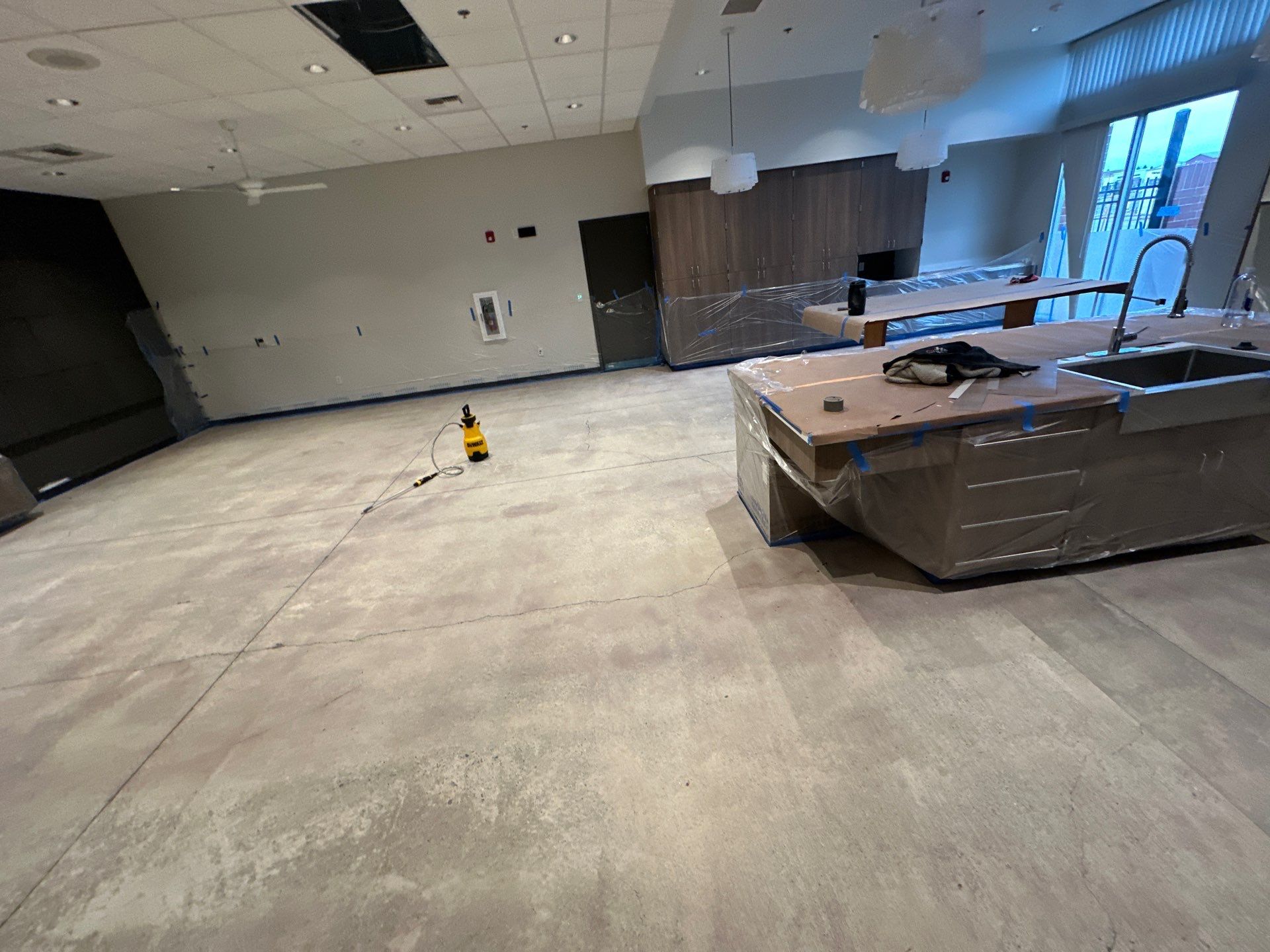
01 / Read the conditions
What is your current floor telling you?
Peeling coatings, worn traffic lanes and difficult cleaning are symptoms, not specifications. Covering the floor without understanding the cause can leave the underlying problem unresolved.
Why is the coating peeling?
Moisture, contamination, unsuitable preparation or an incompatible existing coating may be involved. The cause needs investigation before another layer goes down.
Is the floor hard to clean or slippery?
The right texture depends on spills, cleaning equipment, drainage and footwear. A rougher finish is not automatically the right balance for every work area.
Can the work fit around production?
Access, preparation, installation and cure all take time. A phased plan may be possible, but equipment loads and operating conditions determine the return-to-service requirements.
02 / Define the work
How should an epoxy floor be specified?
Define the working conditions first. Then match the preparation, repairs, resin system and finish to them. You should understand both the recommendation and its limitations.
Explore DTI’s epoxy flooring systems →What happens before coating?
Review the slab, investigate moisture where needed, remove unsuitable materials and identify cracks or joints requiring treatment. Surface preparation is part of the scope, not an optional extra.
Which finish fits the operation?
Compare coating build, chemical exposure, abrasion, cleaning and traction needs. Epoxy may be appropriate; thermal shock or demanding washdown conditions may point toward urethane cement instead.
When can the area reopen?
Plan around the selected system’s cure requirements, temperature, ventilation and intended loads. Confirm pedestrian and equipment access separately rather than relying on a blanket turnaround promise.
03 / Work you can check
Where has DTI used these approaches?
Real facilities. Different requirements. These published projects show how DTI matches flooring to the way a space is used.
What was installed at Roseville Fire Station?
DTI’s published project pairs broadcast epoxy in the apparatus bay with polished concrete in crew areas. Different uses within one facility called for different floor systems.
Read the Roseville Fire Station project →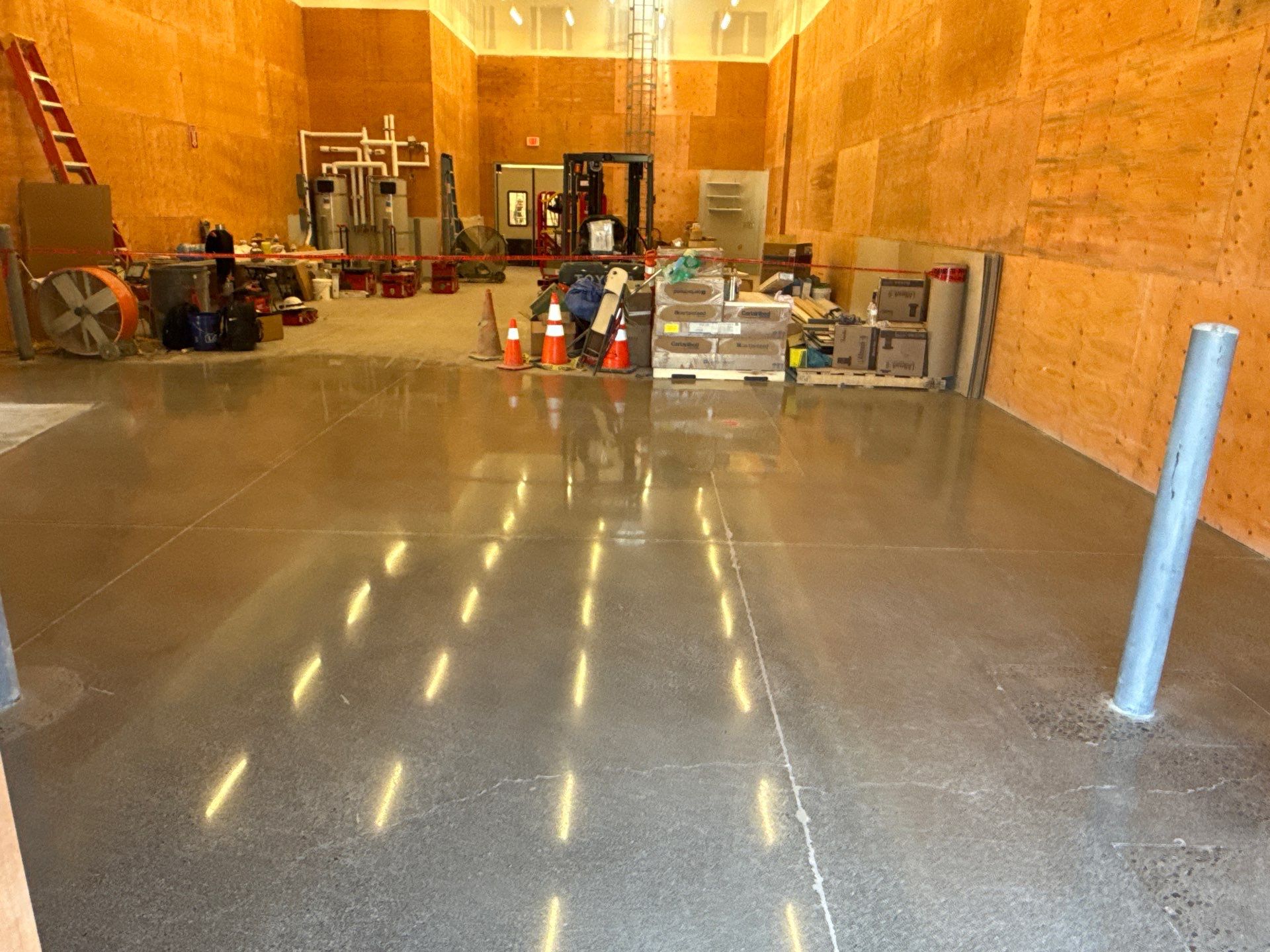
What did Sweetgreen need?
DTI installed urethane cement in the kitchen and polished concrete in the dining area. The project illustrates why wet back-of-house conditions and customer-facing areas need separate specifications.
Read the Sweetgreen project →Source: DTI’s published case studies. Project examples are not a guarantee of the same result or schedule at another facility.
04 / Compare the tradeoffs
How does epoxy compare with other options?
| What to consider | Epoxy coating | Polished concrete | Urethane cement |
|---|---|---|---|
| When to consider it | A bonded coating with a specified finish, texture or chemical-resistance requirement. | Exposed concrete in retail, circulation or other suitable interior areas. | Demanding wet, washdown or thermal-cycling environments. |
| What needs checking | Moisture, contamination, substrate preparation and compatibility. | Slab hardness, patching, cracks and the appearance of the existing concrete. | Substrate condition, exposure, drainage, thickness and detailing. |
| Finish and upkeep | Texture and topcoat affect cleaning; wear areas may need maintenance or recoating. | Sheen and aggregate exposure vary; cleaning and periodic maintenance still matter. | Texture supports the specified use but needs a matching cleaning routine. |
| What drives the quote | Preparation, repairs, system build, area and access. | Grinding stages, repairs, edge work and finish level. | Preparation, thickness, coving, drainage details and installation access. |
A scope before a number
What will affect your flooring quote?
A square-foot rate without a defined scope can leave out the work your floor actually needs. These are the factors to review before comparing proposals.
- Floor area, layout and access around installed equipment
- Existing coatings, contamination and required surface preparation
- Concrete repairs, moisture findings and joint details
- System thickness, texture, topcoat and chemical exposure
- Phasing, shutdown windows and return-to-service requirements
05 / Before you decide
What else should you know?
Short answers to the questions that shape the work. For a recommendation, start with your facility’s conditions.
Can epoxy go over an existing coating?
Sometimes, but only after checking the existing coating’s adhesion, condition and compatibility. Removal may be necessary. An assessment should identify what can stay and what must be removed.
Will epoxy fix cracks in the concrete?
A coating is not a structural repair. Cracks and joints require evaluation and appropriate treatment; moving cracks may remain visible or recur. The repair scope should be agreed before coating.
Is epoxy flooring slip-proof?
No floor is slip-proof. Texture, contaminants, footwear, drainage and cleaning all affect traction. DTI can discuss finish options for the area’s actual use rather than promise universal slip resistance.
How much does commercial epoxy flooring cost?
A useful quote depends on floor area, slab condition, coating removal, moisture findings, system build, detailing and scheduling. DTI needs project information and an assessment to define the scope; a generic square-foot price may omit necessary work.
How long will the facility need to shut down?
The schedule depends on preparation, repairs, the selected materials, site conditions and the loads returning to the floor. Discuss phasing and access during the assessment; there is no single cure time that applies to every system.
What should I send for an assessment?
Share your facility location, approximate floor area, photos, current problems, traffic and cleaning conditions, and your preferred work window. DTI’s existing assessment form lets you describe the project and attach supporting information.
The next step / Your facility
What does your floor actually need?
Tell DTI what is happening on the floor and how the space is used. Start with an assessment request—not a commitment to a coating.