
Commercial & industrial / Concrete flooring
Should you repair, resurface or polish your concrete floor?Let the slab—and its use—decide.

Separate the repairs your floor needs from the finish you want.
A concrete floor assessment separates defects that need repair from choices about appearance. Record spalls, damaged joints, moisture concerns, previous coatings and the intended use of each area. DTI reviews those conditions before recommending localized repairs, broader resurfacing, polishing or staining. Existing patches and slab variation can remain visible in an exposed concrete finish.
Request a floor assessmentTell us about your floor. We’ll start with the conditions, not a price promise.
01 / Read the conditions
Is this a surface problem or a slab problem?
A dusty floor, a damaged joint and an uneven finish need different responses. Decide what must be corrected before deciding how the finished floor should look.
Are cracks, spalls or joints deteriorating?
Identify the type and cause of damage before selecting patching or joint treatment. Movement or structural concerns may require further evaluation rather than a cosmetic repair.
Is the surface worn or covered in old material?
Adhesives, coatings, contamination and surface weakness affect preparation. Resurfacing may be worth considering when local repairs alone will not address the condition of the area.
Do you want polished or stained concrete?
The existing slab influences color, aggregate exposure and visible repairs. A decorative finish does not hide every crack, patch or variation, and stain does not repair the surface.
02 / Define the work
How do repairs and finishes work together?
Treat the concrete’s condition and its appearance as connected—but separate—decisions. The assessment should explain what can be retained, what needs repair and what the final finish can realistically achieve.
Explore DTI’s polished concrete solutions →Explore DTI’s repair and overlay services →When is repair or resurfacing appropriate?
Localized damage may call for targeted repairs. Broader surface deterioration may call for preparation and resurfacing. Depth, bond, moisture, traffic and existing slab condition guide the scope.
When should you consider polished concrete?
Mechanical grinding and polishing can finish suitable concrete for exposed-floor areas. Confirm slab suitability, aggregate exposure, sheen, patch visibility and the cleaning plan before selecting the finish.
Where do stained finishes fit?
Stain adds color to prepared concrete; it is not a repair material. Existing concrete and test samples affect the expected result. Discuss color variation, protection and ongoing maintenance alongside the appearance.
03 / Work you can check
Where has DTI used these approaches?
Real facilities. Different requirements. These published projects show how DTI matches flooring to the way a space is used.
What was installed at Burlington Store?
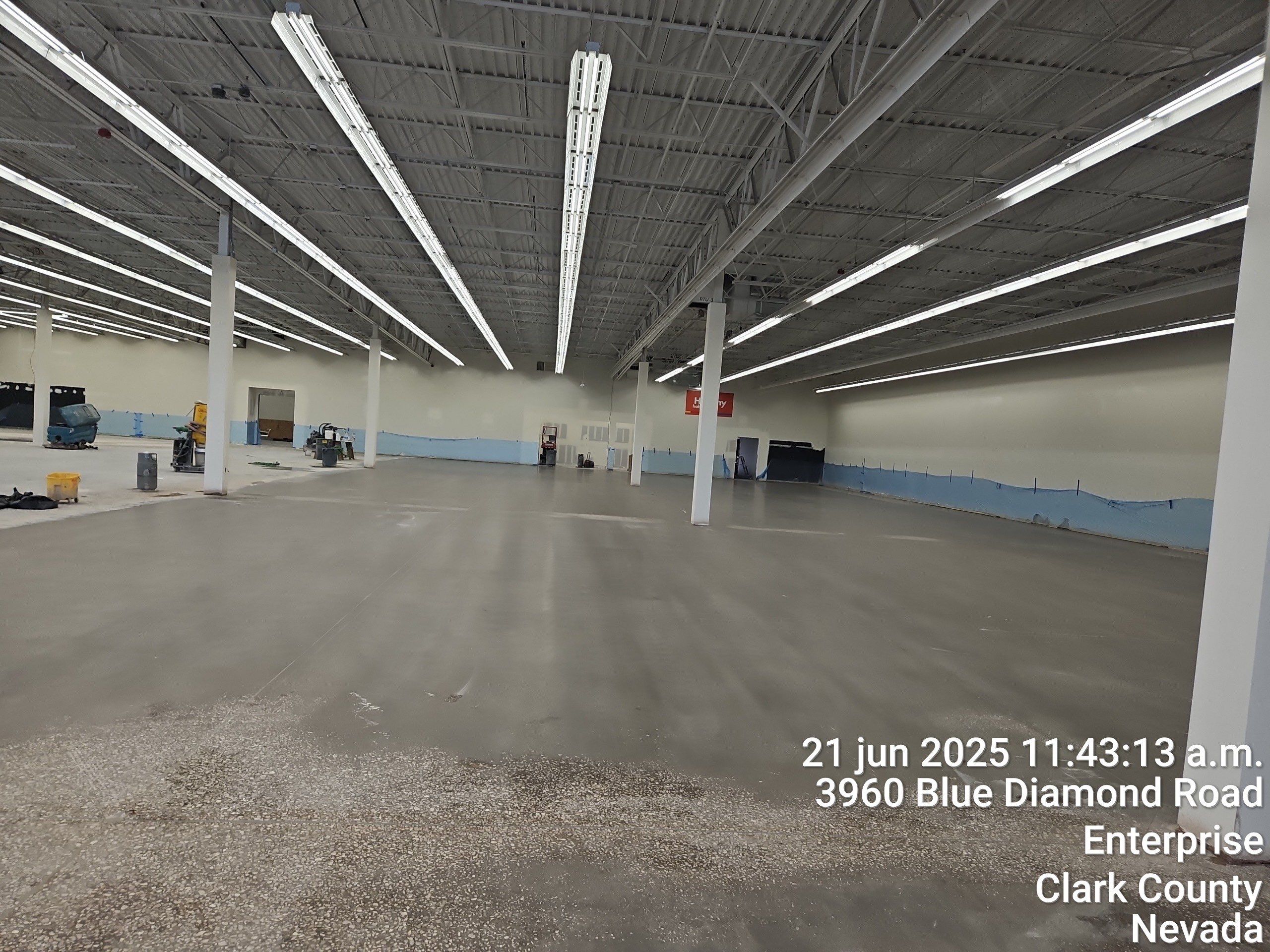
DTI’s published Burlington project documents mechanically polished concrete for a retail environment, coordinated with the general contractor’s build-out schedule.
Read the Burlington Store project →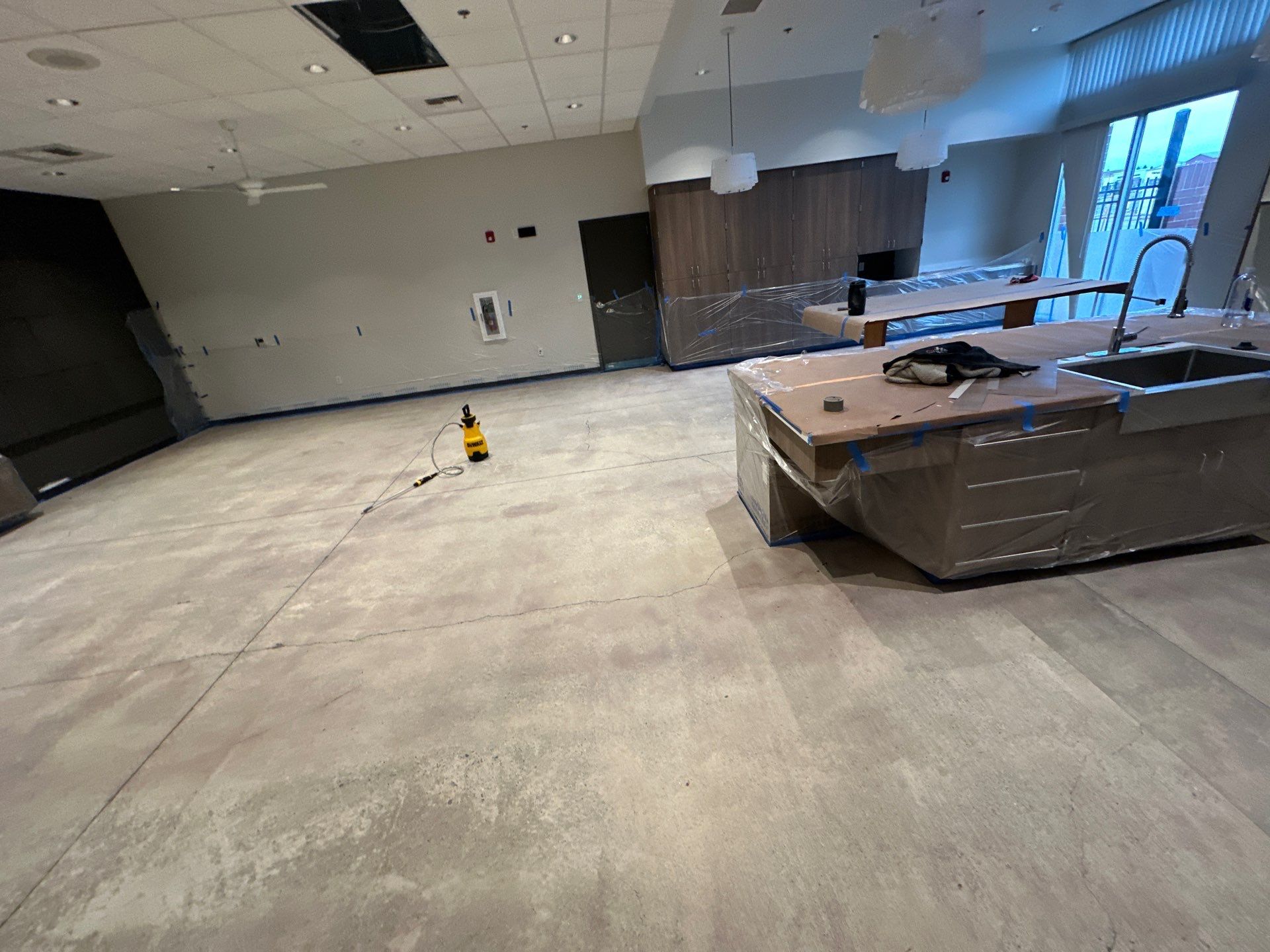
What was installed at Roseville Fire Station?
DTI’s published project pairs broadcast epoxy in the apparatus bay with polished concrete in crew areas. Different uses within one facility called for different floor systems.
Read the Roseville Fire Station project →Source: DTI’s published case studies. Project examples are not a guarantee of the same result or schedule at another facility.
04 / Compare the tradeoffs
Which concrete flooring approach fits your space?
| What to consider | Repair / resurfacing | Polished concrete | Stained concrete |
|---|---|---|---|
| Primary purpose | Address localized damage or renew a deteriorated surface, subject to substrate suitability. | Mechanically refine suitable concrete to an agreed exposure and sheen. | Add color to prepared concrete with a compatible finishing and protection plan. |
| What it does not do | Does not automatically resolve structural movement or eliminate future cracking. | Does not make existing cracks, patches or slab variations disappear. | Does not repair cracks, spalls or unevenness. |
| What needs checking | Damage depth, movement, bond, moisture and intended loads. | Slab hardness, aggregate, previous coatings, repairs and edge access. | Surface porosity, previous treatments, color sample and maintenance needs. |
| What drives the quote | Repair quantity and depth, preparation, material and access. | Grinding stages, finish level, edges, repairs and floor area. | Preparation, color treatment, sample work and protective finish. |
A scope before a number
What will affect your flooring quote?
A square-foot rate without a defined scope can leave out the work your floor actually needs. These are the factors to review before comparing proposals.
- Extent and depth of cracks, spalls, joint damage or surface wear
- Coating or adhesive removal, contamination and moisture findings
- Repair or resurfacing materials and preparation requirements
- Polish level, aggregate exposure, stain samples and protective finish
- Floor area, edges, equipment access and operational work windows
05 / Before you decide
What else should you know?
Short answers to the questions that shape the work. For a recommendation, start with your facility’s conditions.
Can damaged concrete be polished?
Possibly, after appropriate repairs and an evaluation of the slab. Repairs, cracks and color differences may remain visible. Some floors are better suited to resurfacing or a coating instead of polishing.
What is the difference between repair and resurfacing?
Repair typically targets specific defects such as spalls or damaged joints. Resurfacing addresses a broader surface area with a compatible material. Neither should be selected without understanding the existing concrete and the cause of deterioration.
Can concrete be stained as well as polished?
Color treatments can be considered with suitable concrete finishing systems. Compatibility, preparation and sample results matter. Discuss the desired appearance with DTI before choosing a polishing sequence or stain treatment.
Will polished or stained concrete look uniform?
Not necessarily. Aggregate, concrete placement, patches, previous treatments and porosity can create visible variation. A representative sample helps set expectations, but it cannot guarantee every part of an existing slab will look identical.
How much does concrete repair or finishing cost?
The quote depends on damage, preparation, repair depth, floor area, access and the finish selected. Polishing stages, staining samples, protective treatments and phasing can change the scope. Request an assessment rather than relying on an unsupported per-square-foot figure.
Can work be phased around an occupied facility?
Phasing may be possible, depending on access, dust controls, repair materials, equipment and the operation’s requirements. DTI can discuss work zones and return-to-service needs when reviewing the project.
The next step / Your facility
Repair first? New finish? Find out.
Share the condition of your concrete and what the space needs to do. Ask DTI to assess repair, resurfacing, polished and stained finish options before you choose a scope.