Industrial & Commercial
Epoxy Flooring Contractor
DTI specifies and installs industrial and commercial epoxy flooring systems for warehouses, manufacturing facilities, food processing plants, pharmaceutical facilities, distribution centers, and automotive facilities. As an experienced epoxy flooring contractor, we select each system based on your facility's actual operating conditions. We analyze your specific traffic levels, chemical exposure, substrate condition, and compliance requirements so the right flooring solution is locked in before any work is priced or performed.
5M+ Sq. Ft.
Industrial Floors Installed
10+ Years
Contracting Experience
100% ICRI
Compliant Surface Prep
99.4%
On-Time Completion Rate
Industrial Epoxy Flooring Systems
Industrial Epoxy Flooring Systems Built for Demanding Facilities
Commercial and industrial floors face very different operating conditions. DTI specifies epoxy floor coating systems around the facility rather than applying the same coating everywhere.
Engineered Coatings
High-Performance Commercial Epoxy Systems
Every industrial space demands a specific formulation. DTI designs custom flooring systems to meet mechanical, thermal, and regulatory demands.
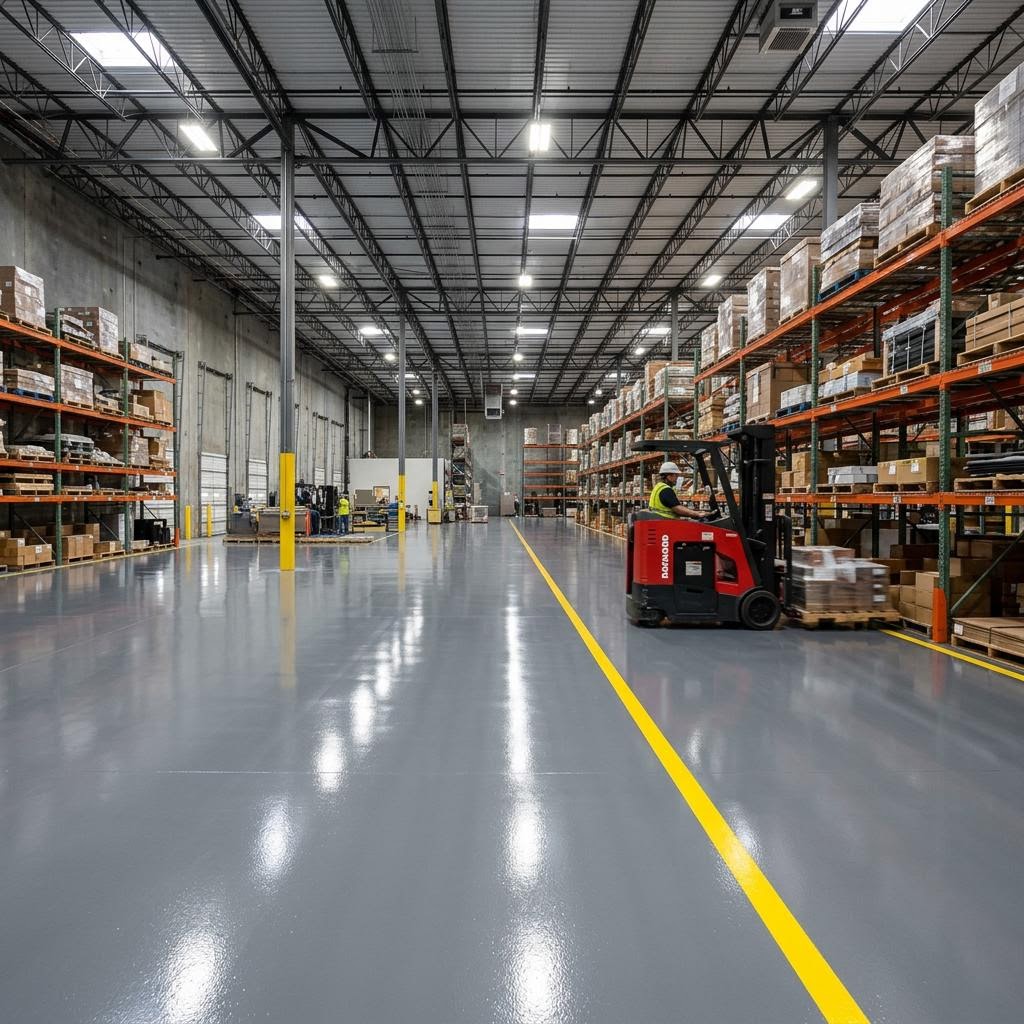 Heavy Industrial
High-Build Solid Epoxy
100% solids epoxy coating engineered for high-traffic warehouses, manufacturing plants, and heavy forklift corridors. Superior impact and abrasion resistance.
- Chemical & Oil Resistant
- Seamless, High-Gloss Finish
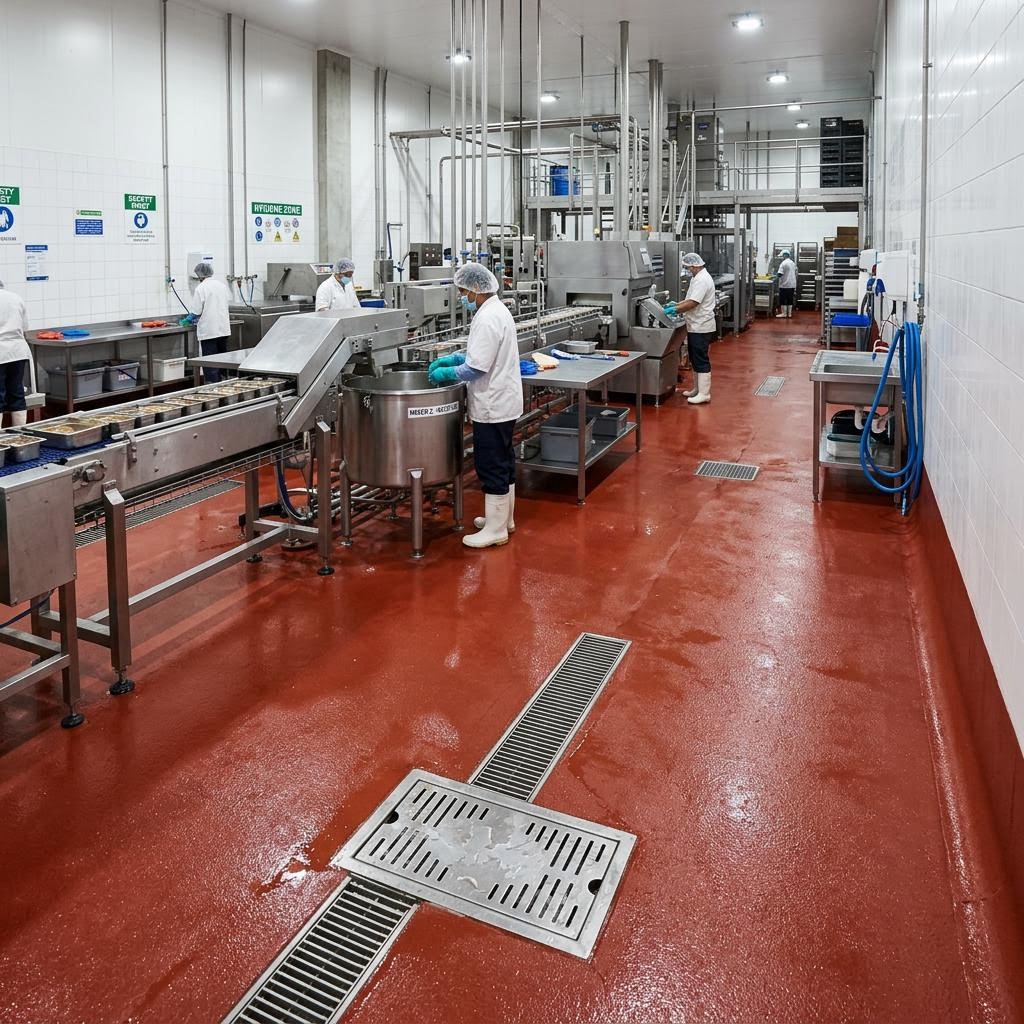 Food & Pharma
Urethane Cement & Antimicrobial
Thermal shock resistant floors designed for steam cleaning and extreme temperature changes in food processing, breweries, and commercial kitchens.
- FDA & USDA Compliant
- Withstands Steam & Hot Washdowns
 Commercial & Retail
Decorative Epoxy Flake & Quartz
Multi-layer vinyl flake or color quartz embedded in epoxy with polyaspartic topcoats. Provides attractive, slip-resistant textures for showrooms and restrooms.
- Customizable Colors & Slip Texture
- UV-Stable & Scratch Resistant
Project Experience
Completed Commercial & Industrial Epoxy Flooring Projects
Real project applications demonstrate how flooring systems are selected around traffic, chemical exposure, appearance, safety and operational requirements.
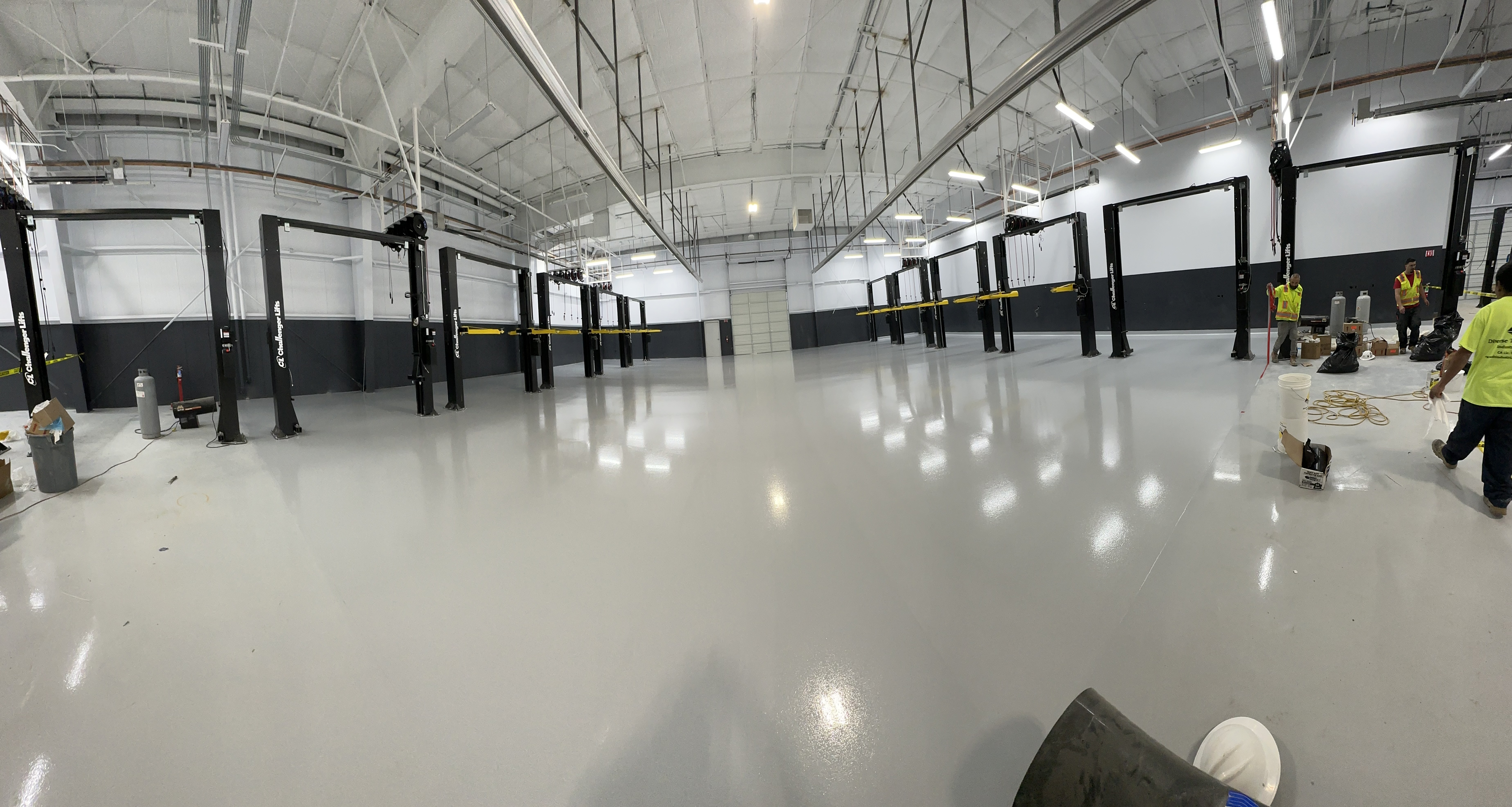
Nissan Dealership
Automotive dealership service areas face heavy vehicle traffic, oil and fluid exposure, and the need for a clean, professional finish that holds up under daily use. DTI installed a broadcast epoxy system in the service bay with a chemical-resistant polyurethane topcoat and anti-slip aggregate in high-traffic zones. The floor handles daily vehicle movement and fluid spills while maintaining a finished appearance appropriate for a customer-facing facility.
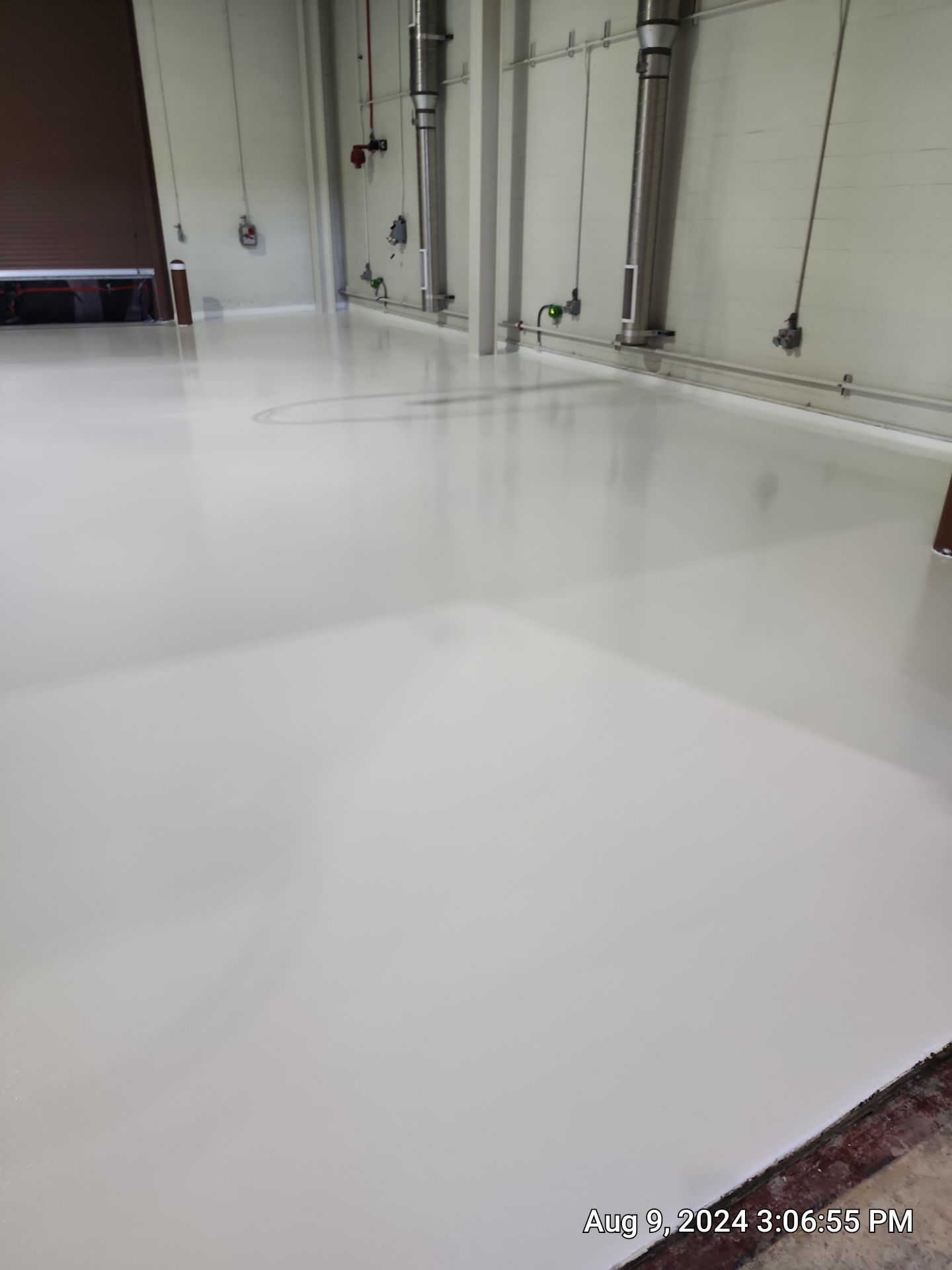
Travis Air Force Base
High-traffic service areas at Travis AFB required flooring upgrades to withstand constant vehicle movement, fuel and chemical exposure, and round-the-clock operational use. DTI installed a broadcast epoxy system with a chemical-resistant topcoat within a tight installation window that minimized disruption to base operations.
Industries Served
Epoxy Flooring for Warehouses, Manufacturing & Industrial Facilities
Installation & Surface Preparation
Industrial Epoxy Floor Surface Preparation & Installation
How is concrete prepared for epoxy flooring? Industrial epoxy installation begins by evaluating the slab, moisture and contamination, then mechanically profiling the concrete with methods such as shot blasting or diamond grinding. Cracks, joints and damaged areas are addressed before primer, body coats, aggregate and the specified topcoat are installed.
Methodology
Our 6-Step Epoxy Installation Protocol
Epoxy bond strength is determined almost entirely by surface preparation. A properly prepared concrete surface has a profile equivalent to medium-grit sandpaper — open pores, no contamination, correct moisture content.
Moisture Testing
ASTM F2170 relative humidity and ASTM F1869 calcium chloride tests.
Mechanical Preparation
Shot blasting or diamond grinding to CSP 3–4 surface profile.
Crack & Joint Repair
All active cracks filled, deteriorated joints addressed. Learn about our repair systems →
Primer Application
Penetrating epoxy primer applied to saturate the concrete surface.
System Application
Base coat, aggregate (if specified), and topcoat applied in sequence.
Return to Service
Foot traffic typically 24 hours, vehicle traffic 48–72 hours.
Moisture Testing Standards
- • ASTM F2170 - relative humidity in-slab testing
- • ASTM F1869 - calcium chloride surface emission test
Moisture mitigation specified as needed. Learn about our waterproofing services →
Uncompromising Execution
Why Facilities Choose DTI as Their Epoxy Flooring Contractor
Most industrial floor failures aren't caused by bad epoxy—they are caused by poor substrate surface preparation and inexperienced application crews. At DTI, we solve floor failures before they happen through exact concrete profiling and rigorous quality engineering.
Concrete Substrate Remediation Standard
We perform shot blasting, crack routing, moisture vapor testing (MVT), and joint rebuilding prior to applying any resinous material.
Accelerated Fast-Cure Options
Our polyaspartic and rapid-cure urethane formulas allow full operational return-to-service in as little as 12 to 24 hours.
Full Regulatory & Safety Audit Compliance
Guaranteed adherence to FDA, USDA, HACCP, and OSHA non-slip safety requirements for auditing peace of mind.
Contractor Compliance & Industry Certifications
Verified Client Feedback
Trusted by Facility Managers Nationwide
"DTI resurfaced 35,000 sq ft of our food manufacturing plant floor over a holiday weekend. They met our strict FDA auditor requirements and delivered a flawless finish on time."
Plant Operations Director | Logistics Facility
"Finding an epoxy contractor that actually understands concrete repair was hard until we met DTI. They fixed deep joint degradation before installing our heavy industrial epoxy."
Facility Manager | Automotive Tech Center
"Outstanding commercial flooring team. Professional, fully equipped, and transparent with pricing. Highly recommended for commercial or industrial projects."
General Contractor | Commercial Engineering
Answers to Common Questions
Epoxy Flooring Contractor FAQ
What does an industrial epoxy flooring contractor do?
An industrial epoxy flooring contractor is a specialized commercial firm responsible for preparing concrete substrates and applying multi-layer resinous coating systems. This process includes heavy-duty mechanical profiling (shot blasting or diamond grinding), concrete joint and crack remediation, and installing chemical-resistant epoxy, polyurethane, or urethane mortar systems designed to withstand heavy machinery, chemical spills, and regulatory safety inspections.
Epoxy System Types
Not all epoxy flooring is the same. The right system depends on what the floor needs to do.
Most common commercial & industrial system
A base coat is applied, decorative flake or quartz aggregate is broadcast into the wet epoxy, and a clear polyurethane or polyaspartic topcoat seals the surface. The aggregate layer adds texture, slip resistance, and thickness.
Seamless, high-gloss surface
A high-build liquid epoxy that flows to a smooth, flat finish. Applied at thicknesses from 1/8" to 1/4" depending on specification. Produces a seamless, high-gloss surface with no aggregate texture.
Heaviest-duty system available
Mixed with graded sand or aggregate to create a thick, impact-resistant surface. Applied at 1/4" to 1/2" thickness. Handles the heaviest forklift loads, dropped equipment, and severe chemical exposure.
10–20 mils dry film thickness
A surface-applied epoxy coating providing basic protection and a clean finish for substrates in good condition that don't require a heavy system.
Static-control upgrade
Standard epoxy systems can be upgraded with a conductive primer and ESD topcoat for environments requiring static control. See our ESD Flooring page for full specifications.
Chemical Resistance
Epoxy systems vary significantly in their chemical resistance. The base epoxy layer provides general resistance - the topcoat determines the system's actual chemical performance. DTI specifies topcoats by your facility's specific chemical inventory:
General chemical resistance, UV stable, good abrasion resistance. Standard specification for most commercial and industrial applications.
Fast cure (return to service in 4–6 hours), excellent UV resistance, high abrasion resistance. Used when schedule is critical or outdoor/UV exposure is a factor.
High-performance chemical resistance for environments with aggressive acids, solvents, or caustics. Standard specification for chemical processing and some food/beverage environments.
If you have a specific chemical exposure requirement, DTI can provide a chemical resistance chart for the proposed system before installation begins.
Nationwide Project Support
Nationwide Industrial Epoxy Flooring Contractor
DTI Flooring supports commercial and industrial epoxy flooring projects across the United States. Facility managers, general contractors and project owners can engage DTI for epoxy system selection, concrete preparation, installation planning and high-performance resinous flooring applications.
For Central Valley food packing and distribution facilities, see our commercial epoxy floor coating in Fresno service area details.
Primary service: Industrial & commercial epoxy flooring
Project audience: Facility managers, GCs & owners
Coverage: Nationwide project support
FloorFront
Related Readings
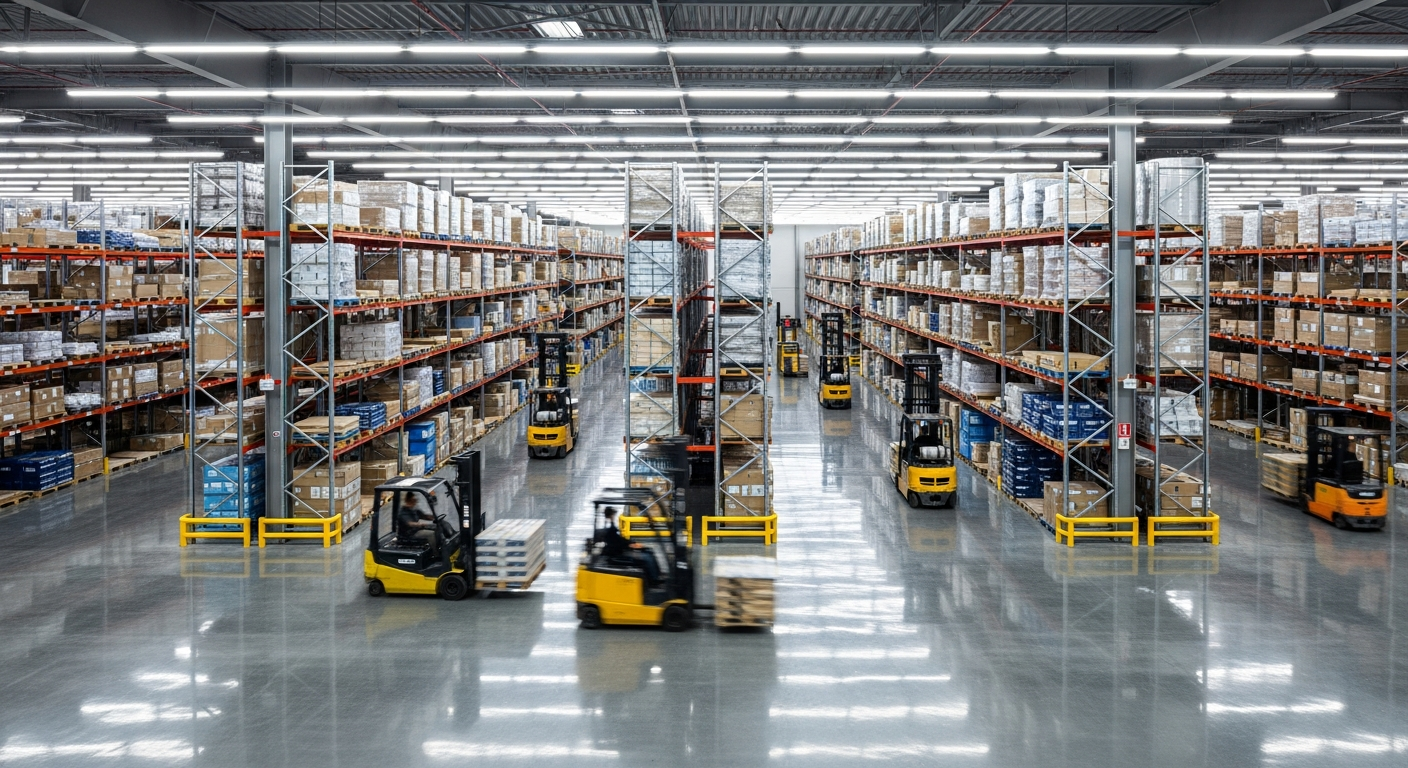
How to Choose a Warehouse Floor Coating (Without Paying for It Twice)
A plain-English guide to choosing a warehouse floor coating around traffic, durability and budget.
Read Article →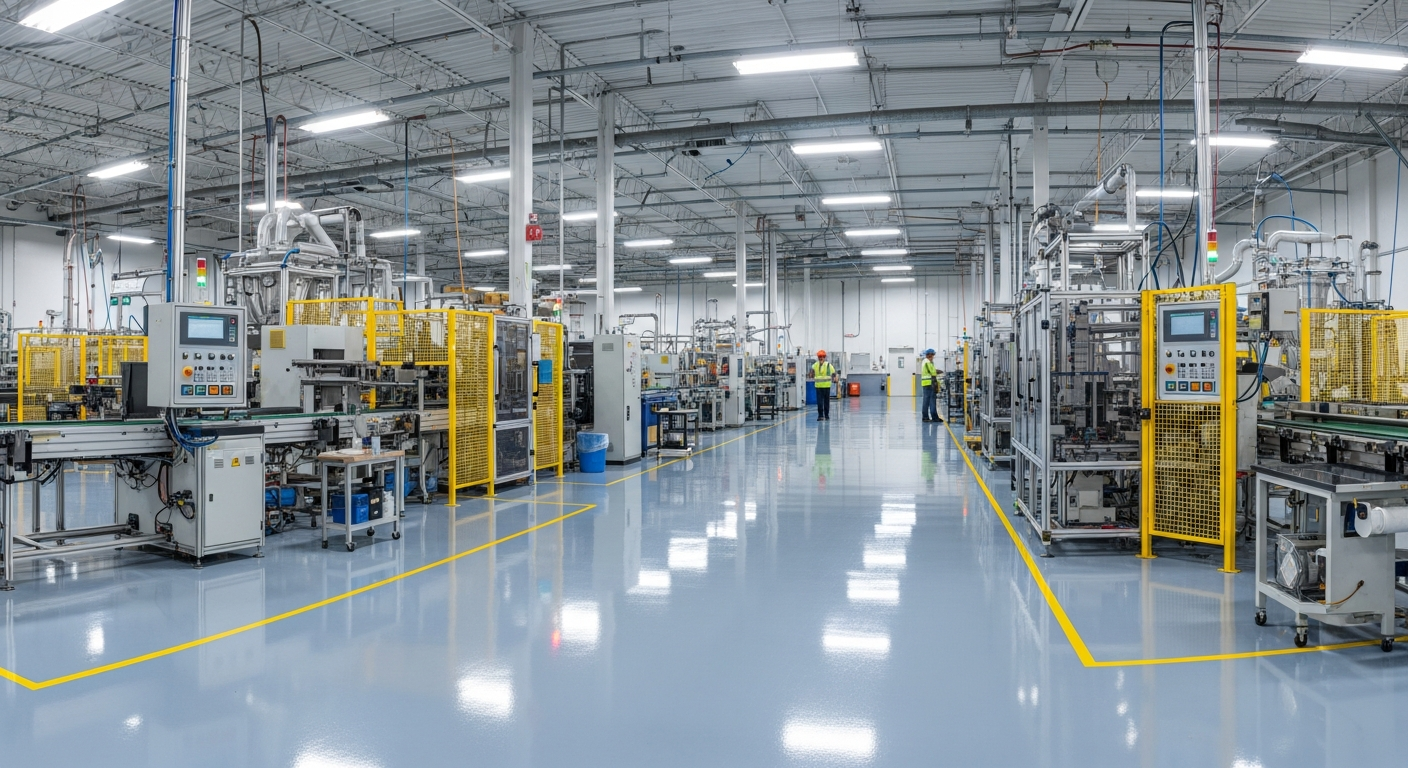
High-Performance Epoxy Flooring for Manufacturing Facilities
Durable, chemical-resistant industrial floor solutions for demanding manufacturing environments.
Read Article →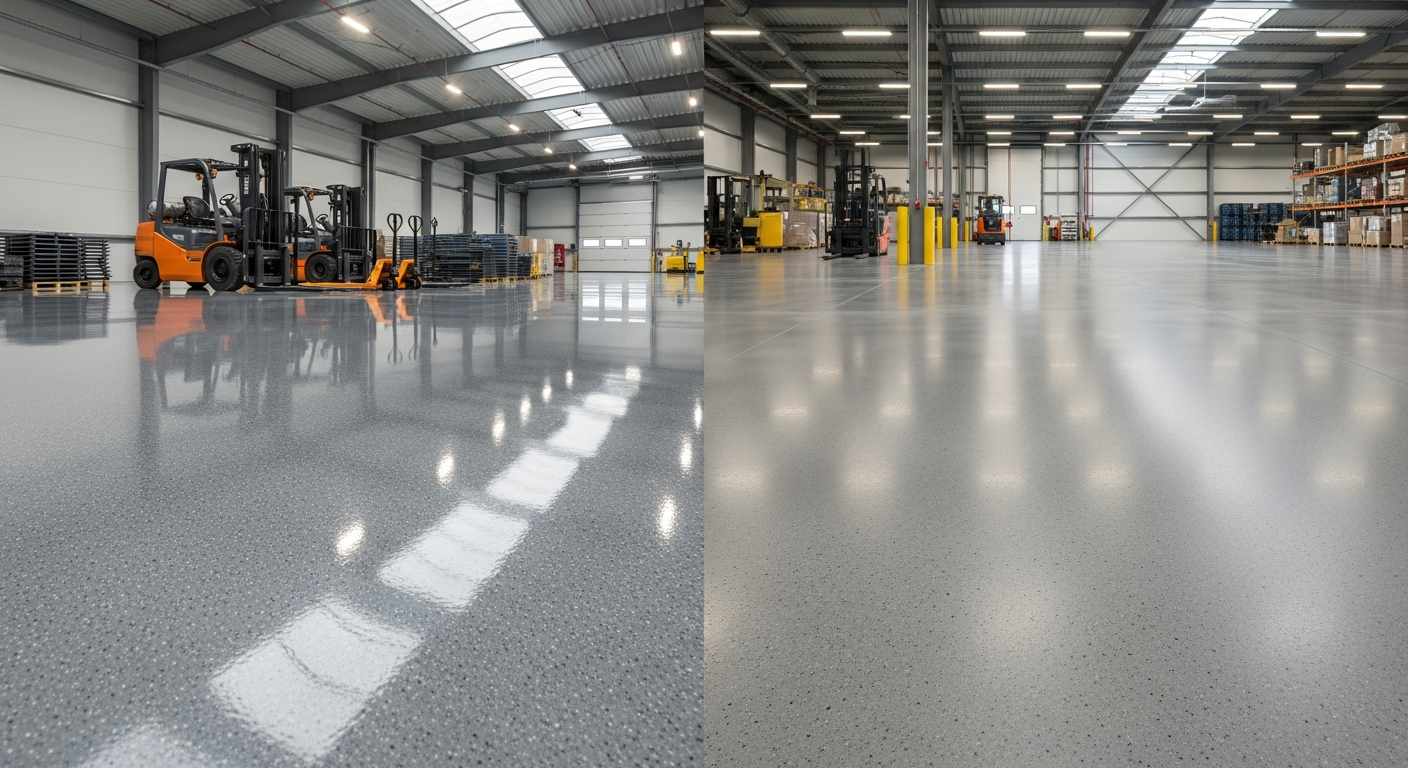
Epoxy vs Polished Concrete: Industrial Flooring Comparison
A comprehensive comparison of epoxy and polished concrete for facility decision-makers.
Read Article →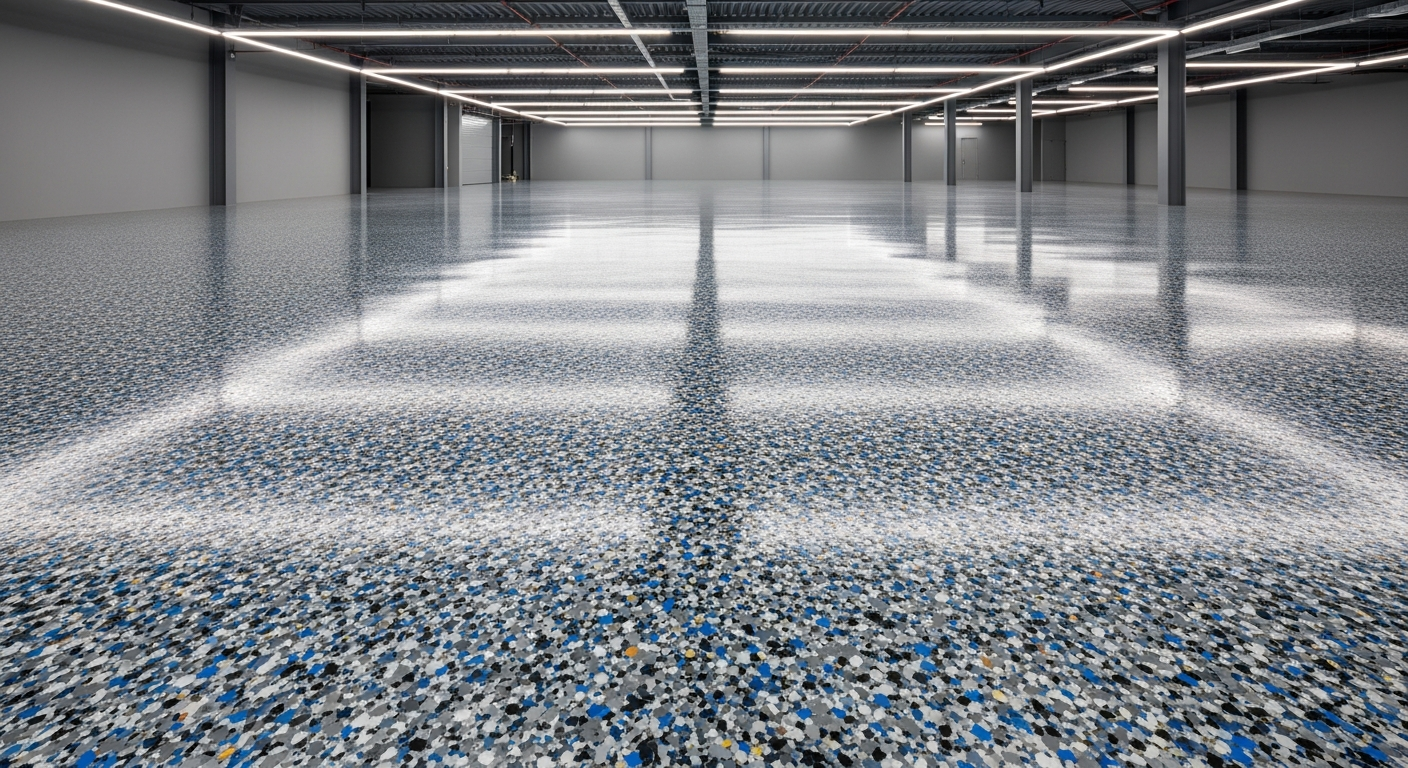
Decorative Epoxy Flake Flooring Systems: Complete Guide
Costs, installation and benefits of decorative flake systems for commercial spaces.
Read Article →Serving Commercial and Industrial Facilities Nationwide
DTI works with facility managers, general contractors, and project owners on epoxy flooring installations across the United States. We provide a written system specification and estimate before any work begins.
Request a Project Consultation