Commercial & Industrial
Polished Concrete Contractor
DTI is a nationwide commercial and industrial polished concrete contractor providing professional concrete polishing and grinding services. We deliver durable, low-maintenance polished concrete flooring solutions designed around existing slab conditions, facility requirements, traffic demands, and the desired finish.
5M+
Sq. Ft. Installed
10+
Years of Experience
100% ICRI
Compliant Surface Prep
99.4%
On-Time Completion Rate
Polished Concrete Services
Polished Concrete Flooring Built for Demanding Facilities
Concrete polishing is a mechanical process - not a coating. DTI specifies the grind level, densifier, and sheen around how your facility actually operates rather than applying the same finish everywhere.
Stained Concrete and Polished Concrete Services
DTI offers both stained concrete and polished concrete for commercial and industrial facilities. Staining adds color to the concrete, while polishing mechanically refines the surface to a specified sheen. The two can also be combined for a stained, polished concrete finish. DTI assesses the existing slab and your desired appearance to recommend a suitable approach.
Engineered Finishes
High-Performance Polished Concrete Systems
Polished concrete is specified by sheen level - the higher the number, the more reflective the finish. DTI recommends a level based on your environment, traffic class, and maintenance expectations.
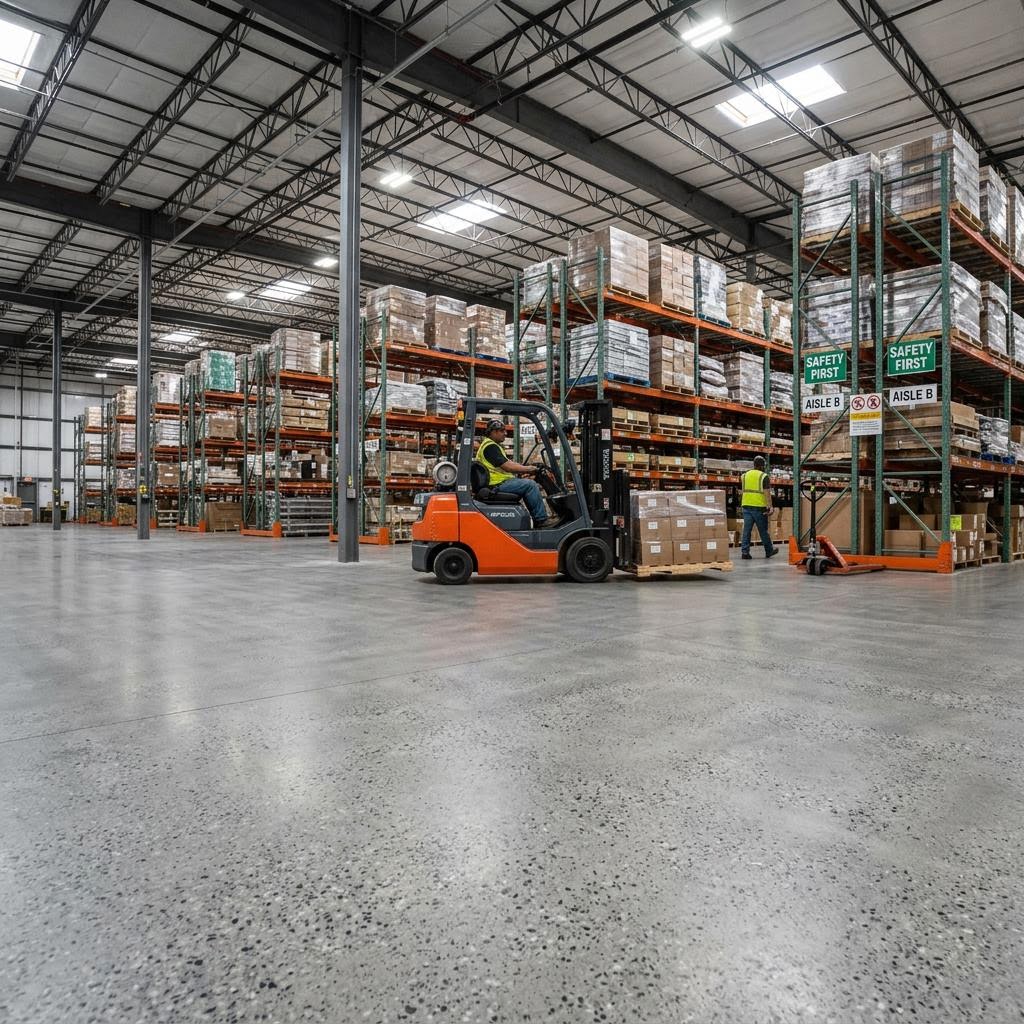 Heavy Industrial
Industrial Matte & Satin (Level 1–2)
Ground smooth with low-to-no reflectivity for warehouses, logistics, and light industrial environments where dust proofing, durability, and functionality are the priorities.
- Eliminates Concrete Dusting
- Handles Forklift & Pallet Traffic
 Retail & Commercial
Semi-Gloss Retail Finish (Level 3)
Clear reflectivity with visible aggregate - the most common retail and commercial specification. Durable, attractive, brand-standard consistent, and low-maintenance.
- Most Common Commercial Spec
- No Waxing or Recoating Cycle
 Showrooms & Lobbies
High-Gloss Architectural (Level 4)
Mirror-like reflectivity with full aggregate exposure for showrooms, corporate lobbies, and high-end commercial environments where floor appearance is a priority.
- Maximum Light Reflectivity
- Dye & Stain Color Options
Project Experience
Completed Commercial & Industrial Polished Concrete Projects
Real project applications demonstrate how polishing specifications are selected around traffic, appearance, scheduling and operational requirements.
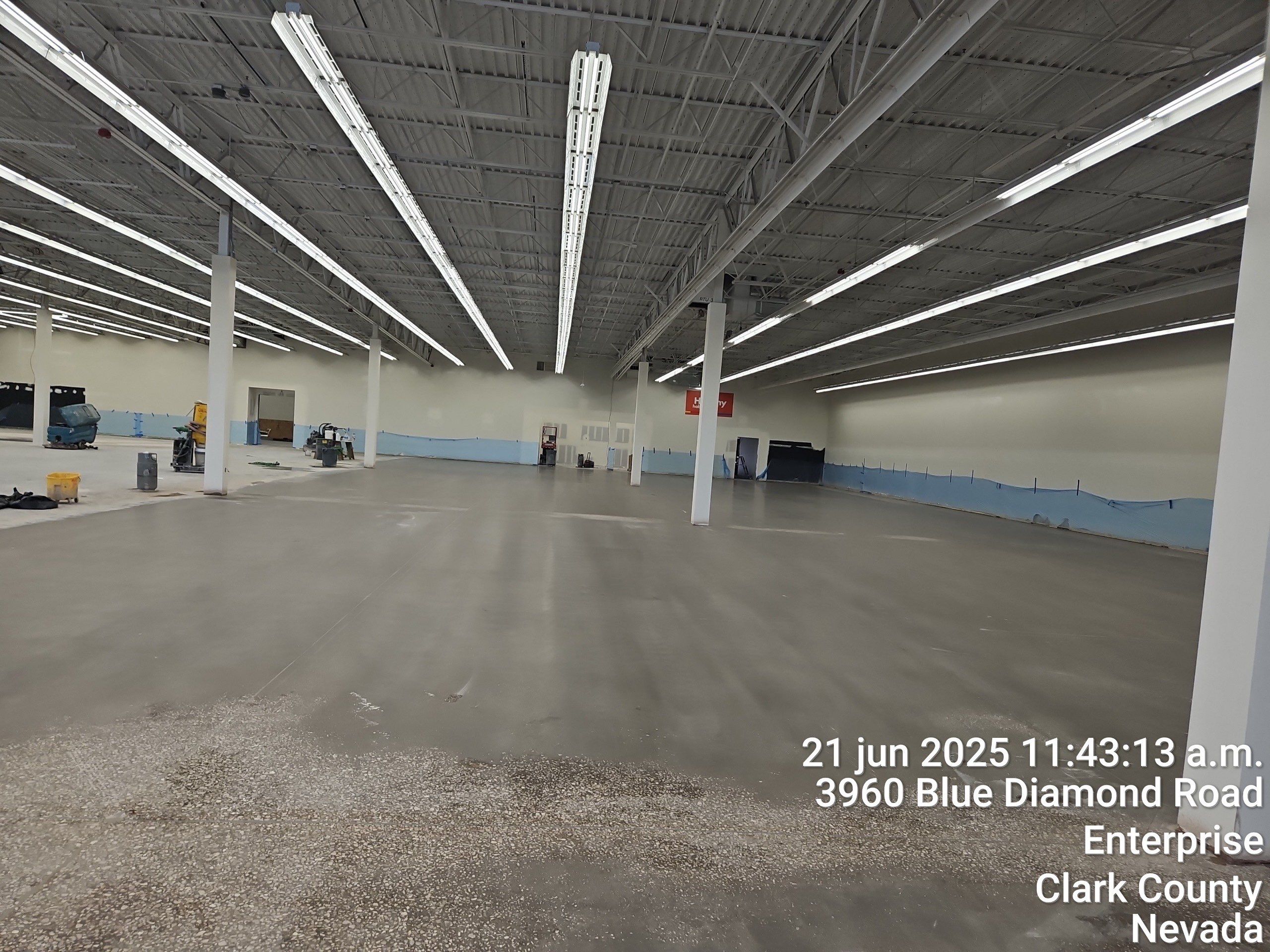
Burlington Store
Burlington's Las Vegas retail location required polished concrete installed on a construction timeline - fast cure, return-to-service within 48 hours, and a finish that met the chain's brand standard for sheen level and consistency across the full floor plate. DTI coordinated directly with the GC to schedule installation within the build-out window and delivered a Level 3 polished concrete floor on time and to spec.
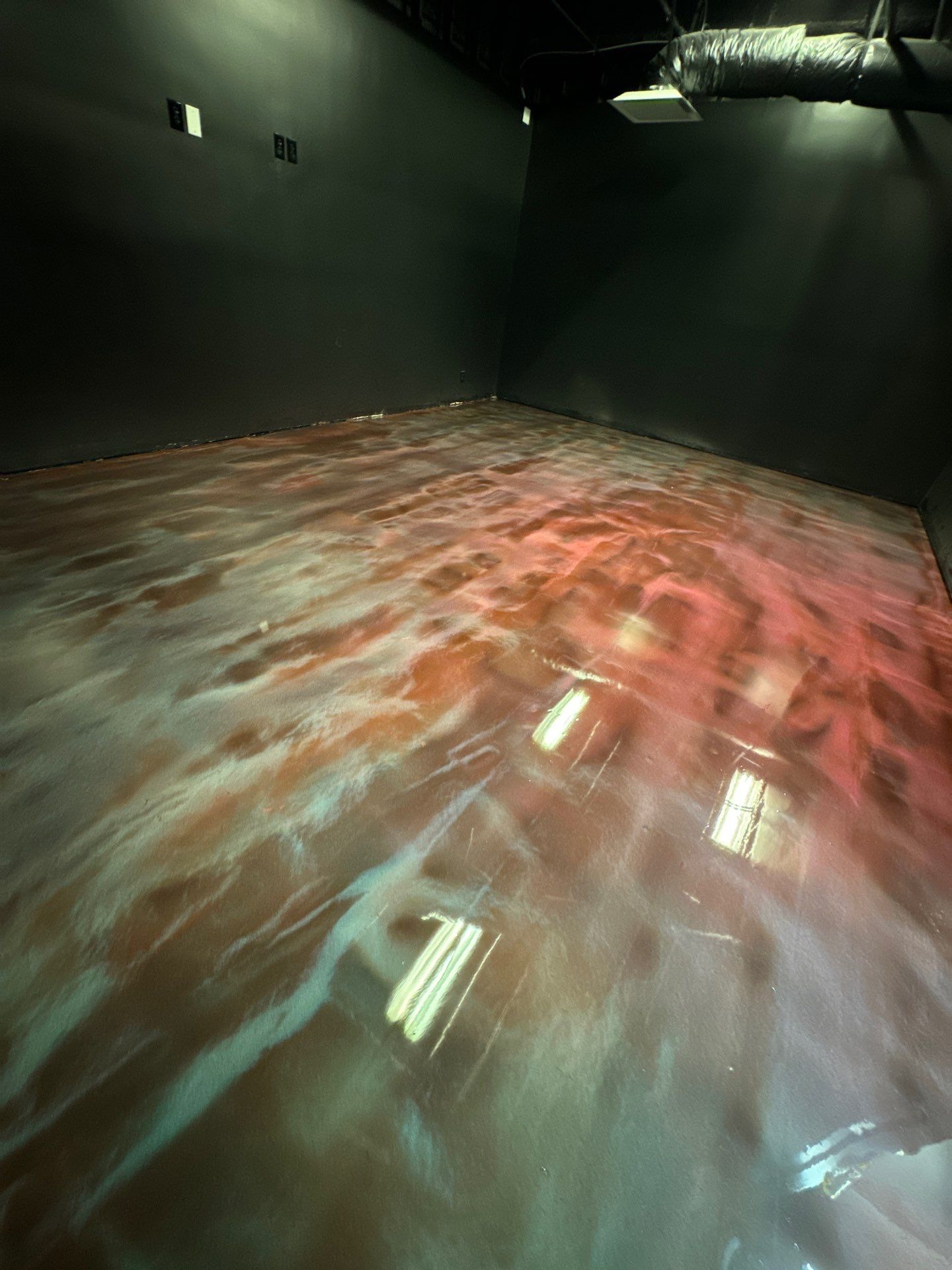
Escape Games San Francisco
Entertainment venue flooring needs to handle steady foot traffic and daily cleaning while maintaining the aesthetic the space was designed around. DTI polished the concrete floor to a medium sheen that complemented the venue's interior design - durable enough for commercial use, finished to a level that didn't require ongoing waxing or recoating.
Industries Served
Polished Concrete for Retail, Warehouses & Commercial Facilities
Grinding & Polishing Process
Our Concrete Grinding & Polishing Process
How is concrete polished? Concrete polishing is a mechanical process - not a coating. It uses progressively finer diamond tooling to grind the concrete surface down to the desired exposure level, then densifier is applied to chemically harden the surface, and final polishing passes bring the floor to the specified sheen.
Methodology
Our 5-Step Concrete Polishing Protocol
Every square foot is mechanically ground, densified, and polished to the specified sheen level.
Coarse Grinding
Metal bond diamonds remove existing coatings, adhesives, and contamination. Addresses high spots, lippage, and surface defects, and sets the aggregate exposure level.
Medium Grinding
Transitional diamonds refine the surface profile and develop flatness. Scratches from coarse grinding are removed progressively through finer grits.
Densifier Application
A lithium or sodium silicate densifier reacts with free lime in the concrete - filling pores, increasing surface hardness, and significantly reducing dusting.
Fine Polishing
Progressive polishing with resin bond tooling brings the surface to the specified sheen. Grit sequence continues until the target finish is confirmed.
Guard Sealer Application
A penetrating guard sealer repels water, oil, and staining agents without altering the floor's appearance or adding a surface film.
No topcoat to peel. No film to maintain.
The finished surface is the concrete itself - ground, densified, and polished. A penetrating guard sealer is applied at the end to repel water, oil, and staining agents without altering the floor's appearance or adding a surface film.
Uncompromising Execution
Why Facilities Choose DTI as Their Concrete Polishing Contractor
Most polished concrete disappointments aren't caused by bad concrete—they are caused by rushed grinding sequences and skipped densification. At DTI, we deliver consistent, specification-grade finishes through disciplined diamond progression and rigorous quality control.
Full Diamond Grit Progression
We never skip grits. Each pass is completed and verified before advancing, which is what produces a uniform, brand-standard finish across the full floor plate.
Dust-Controlled, Occupied-Space Ready
HEPA-filtered vacuum systems capture grinding dust at the source, allowing work in occupied or partially operational facilities on night and weekend schedules.
Sheen Verified to Specification
Finish levels are confirmed against the specified gloss target before handover, so retail chains and GCs get the documented consistency their standards require.
Contractor Compliance & Industry Certifications
System Selection
Polished Concrete vs. Epoxy Coating
The right choice depends on what your floor needs to do. DTI installs both systems and will tell you which one is right for your floor before any work begins.
Verified Client Feedback
Trusted by Facility Managers Nationwide
"DTI polished our retail floor to the exact brand-standard sheen on a tight build-out schedule. The finish was consistent across the entire floor plate and turned over on time."
Construction Manager | National Retail Chain
"Our warehouse floor was dusting constantly. After DTI ground and densified it, the dusting stopped and the floor handles daily forklift traffic without any coating to peel or maintain."
Operations Manager | Distribution Facility
"Professional crew, dust-controlled equipment, and honest guidance on which sheen level actually made sense for our space. The floor looks great and cleanup is just a mop."
Facility Director | Commercial Venue
Answers to Common Questions
Concrete Polishing Contractor FAQ
What does a commercial concrete polishing contractor do?
A commercial concrete polishing contractor is a specialized firm that mechanically grinds concrete floors with progressively finer diamond tooling, applies chemical densifiers to harden the surface, and polishes the slab to a specified sheen level. The process includes coating and adhesive removal, surface flatness correction, densification, fine resin-bond polishing, and penetrating guard sealer application for stain resistance.
Nationwide Project Support
Nationwide Polished Concrete Flooring Contractor
DTI Flooring supports commercial and industrial concrete polishing projects across the United States. Facility managers, general contractors and project owners can engage DTI for sheen specification, concrete grinding, densification and high-performance polished concrete applications - single locations and multi-site programs.
Primary service: Commercial & industrial concrete polishing
Project audience: Facility managers, GCs & owners
Coverage: Nationwide project support
FloorFront
Related Readings
Concrete Polishing Services: Durable, Cost-Effective Polished Floors
What goes into professional concrete polishing and why facilities choose it.
Read Article →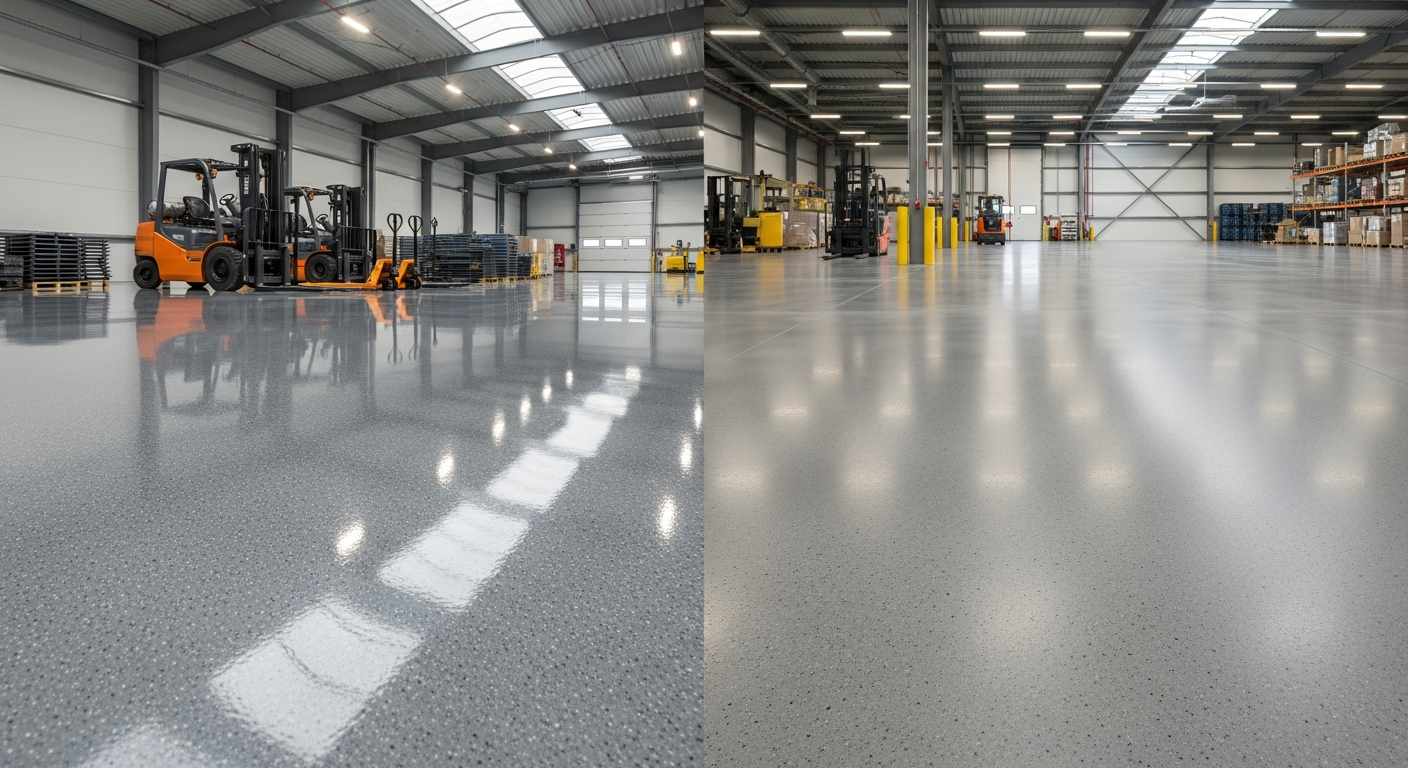
Epoxy vs Polished Concrete: Industrial Flooring Comparison
A comprehensive comparison of epoxy and polished concrete for facility decision-makers.
Read Article →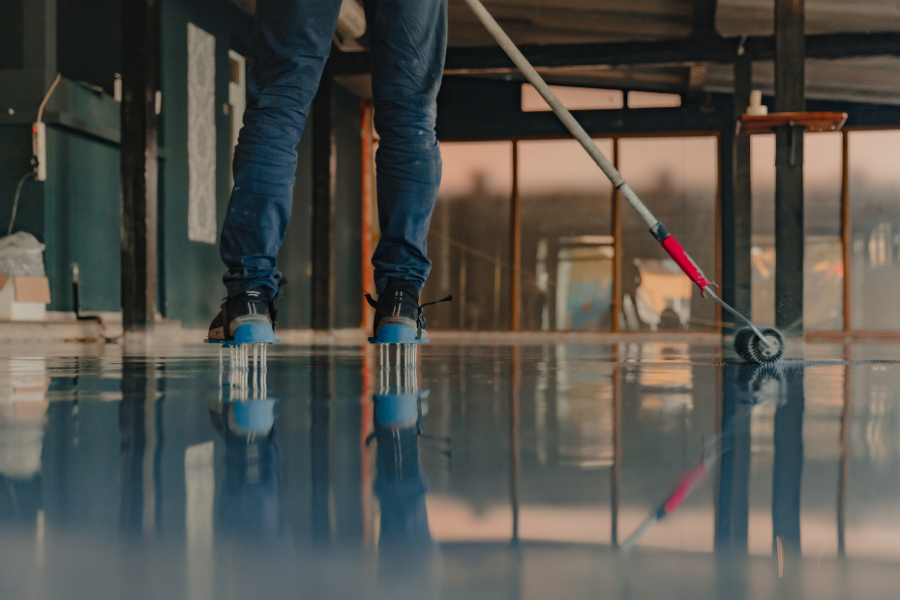
Epoxy vs. Polished Concrete: The Ultimate Showdown
A head-to-head look at durability, cost, maintenance, and where each system wins.
Read Article →
How to Choose a Warehouse Floor Coating (Without Paying for It Twice)
A plain-English guide to choosing between polished concrete, epoxy and sealers.
Read Article →Serving Commercial and Industrial Facilities Nationwide
DTI works with facility managers, general contractors, and project owners on concrete polishing projects across the United States - single locations and multi-site programs.
Request a Project Consultation