What does OSHA require for floor markings in a warehouse or plant?
Floor markings are not a finishing touch — they are a safety and compliance requirement in any facility where vehicles and pedestrians share the same floor. OSHA 29 CFR 1910.22 requires permanent aisles and passageways to be appropriately marked and kept clear. DTI installs interior and exterior line striping and traffic marking systems for warehouses, distribution centers, manufacturing plants, parking structures, and commercial properties nationwide.
In practice, this means striping pedestrian walkways, forklift lanes, and access routes with durable, high-visibility lines, plus marking fire equipment, electrical panels, and egress routes so they remain unobstructed. DTI lays out markings to meet those requirements and to match how your facility actually moves people and equipment.
OSHA does not mandate a single color or line width for all floor markings. Color coding generally follows ANSI guidance, which OSHA references for hazard communication. The 2 to 4 inch width used in industry is a visibility practice, not a specific OSHA width requirement. Aisles, passageways, and storage locations must be clearly identified for traffic control.
Exterior parking and pedestrian markings are installed to the ADA Standards for Accessible Design. Hazard, fire, and egress markings follow NFPA clearances where applicable. Layouts are documented so future restriping matches the approved plan. Routine inspections and upkeep keep markings effective and help maintain compliance over time.
ADA-compliant parking and pedestrian markings
Exterior parking and pedestrian markings must meet ADA Standards for Accessible Design — including stall dimensions, access aisle widths, slope requirements, and signage placement. DTI installs ADA-compliant accessible parking markings and can review existing lot layouts for compliance gaps before installation begins.
- Accessible stall dimensions and quantities
- Access aisle widths (van-accessible and standard)
- Slope requirements for accessible routes
- Signage placement per ADA Standards for Accessible Design
Striping is often the final step after floor installation or recoating. DTI can coordinate marking installation as part of a broader epoxy flooring or concrete repair and overlay project for your facility.
What do the floor marking colors mean?
Markings establish a shared visual language across the facility. Color coding speeds recognition and reduces hesitation, so workers and forklift operators can act quickly and correctly. Use one documented legend throughout the facility, approved with your safety team.
| Color | Floor marking use |
|---|---|
| Yellow | Traffic lanes, aisles, pedestrian walkways, caution, and traffic paths |
| White | Work areas and workstations |
| Red | Fire protection equipment, emergency areas, and emergency stops |
| Orange | Inspection and caution areas |
| Green | Safety and first aid equipment |
| Blue | Informational areas and general signs |
This OSHA-referenced ANSI convention is not a statement that OSHA mandates one color for every situation. DTI documents the color legend with your safety team so the layout stays consistent across the facility.
How wide should floor striping lines be?
Industry practice commonly uses a visibility guideline of about 2 to 4 inches wide. OSHA itself does not mandate a single specific width for all floor markings. The purpose is to clearly identify aisles, passageways, storage locations, and hazard areas so the layout is readable under actual traffic and operating conditions.
A marked-up floor plan defines line widths alongside aisle clearances, zone boundaries, stenciling, and the color legend. Every line is laid out to an approved plan, installed to consistent widths, and verified before the area returns to service.
Which striping material lasts longest?
Striping durability depends on the material specified for the environment. Interior aisles, exterior lots, and safety zones each demand a different marking material and layout discipline. DTI specifies each system around traffic class, cleaning protocol, and compliance requirements.
| Material | Durability or return to service | Where it fits | Performance and selection notes |
|---|---|---|---|
| Epoxy floor paint | 3 to 5 years in high-traffic interiors | Interior industrial and commercial | Bonds directly to concrete and epoxy floors; resists forklift traffic and cleaning chemicals. Common choice for heavy-duty, long-lasting markings. |
| Polyurea / polyaspartic marking paint | Return to service in 1 to 2 hours | High-turnover environments | Fast cure, high abrasion resistance, and excellent chemical resistance. Used with aggressive cleaning protocols or limited curing downtime. |
| Thermoplastic marking | 5 to 7 years outdoors | Parking lots and loading docks | Heat-applied for exterior parking lots and roadways; more durable than painted markings under vehicle traffic. Used in high-volume lots and loading dock approaches. |
| Vinyl floor marking tape | Reconfigurable; no lifespan figure supplied | Flexible or temporary layouts | Faster to install and remove than painted lines. A quick, lower-cost option for temporary or lighter-traffic zones; DTI also installs industrial-grade tape rated for forklift traffic. |
| Polyurethane | No numerical lifespan supplied | Where toughness with some flexibility is needed | Balances durability and flexibility; select against actual traffic and surface conditions. |
Choosing the right material depends on traffic volume, surface condition, and how permanent you want the markings to be. Each option balances durability, cost, and installation time differently. Epoxy suits heavy traffic for long life; polyurethane offers toughness with some flexibility; floor tape is fast and economical for lower-traffic or temporary zones.
Also consider temperature and humidity during application, because they affect adhesion and curing. A material choice cannot compensate for poor surface preparation. Cleaning, profiling, and any required primer determine how long the marking stays clear and readable.
What types of markings does a facility need?
Correct line striping defines traffic flow, separates pedestrian walkways from vehicle lanes, identifies hazardous zones, and prevents incidents that cost far more than the marking itself. DTI specifies the layout, color code, and marking material around how your facility actually operates.
A line striping and traffic marking contractor lays out and installs the floor markings that control traffic in a facility: pedestrian walkways, forklift lanes, staging and storage zones, hazard and equipment perimeters, aisle numbering and stenciling, and exterior parking stalls, directional arrows, fire lanes, and ADA-compliant accessible stalls. The work includes surface preparation, layout to an approved plan, material selection for the traffic and cleaning environment, and installation of durable epoxy, polyurea, thermoplastic, or vinyl tape markings.
Four warehouse marking types
- Pedestrian walkways: marked paths that keep people separated from moving equipment.
- Forklift lanes: dedicated routes for powered industrial vehicles to reduce conflict points.
- Storage areas: outlines and bay markings that show where pallets and racks belong.
- Hazard zones: high-visibility markings warning of areas requiring extra caution or PPE.
Together, these markings form a coherent visual system that supports safer, more efficient operations. The need to separate pedestrians from equipment also extends to transit station flooring, where clearly marked routes help people navigate high-traffic spaces.
Aisle and pedestrian striping
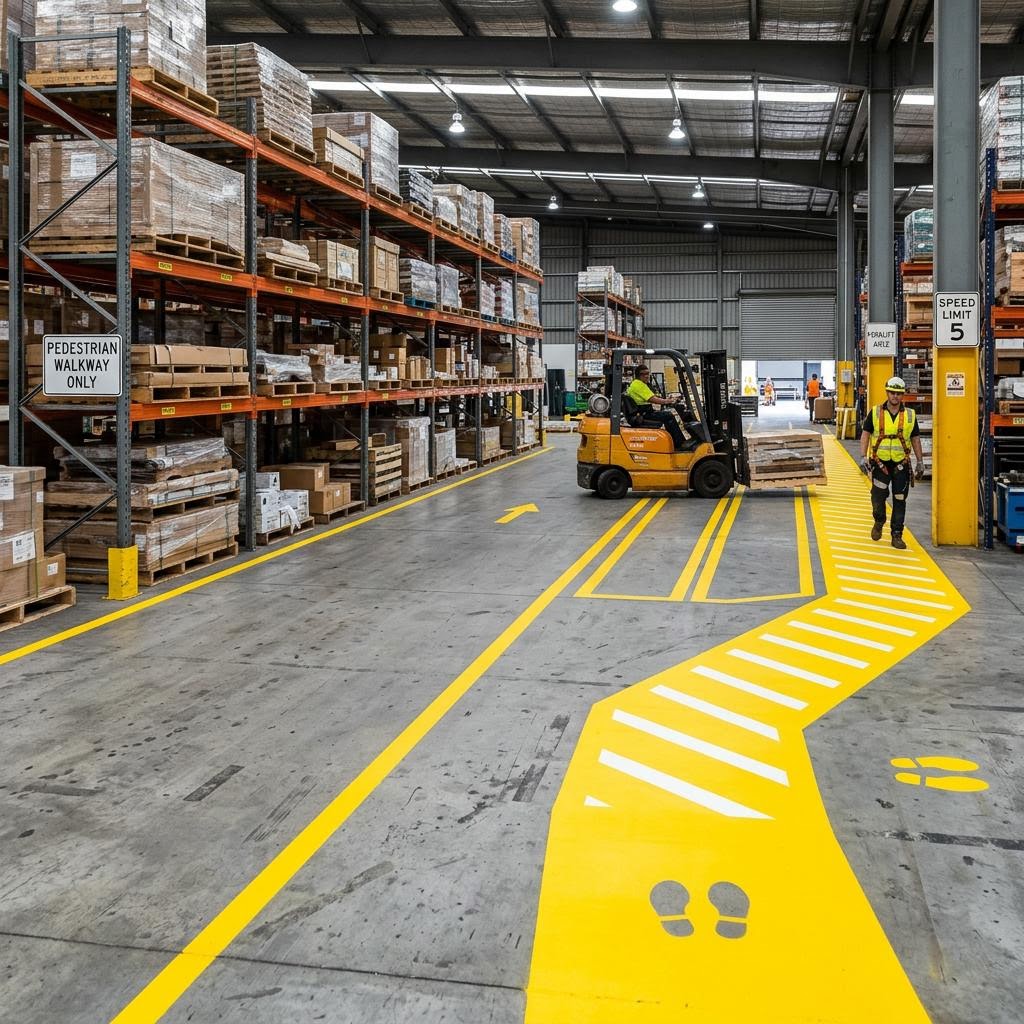
Forklift lanes, pedestrian walkways, loading zones, staging areas, and restricted-access boundaries are laid out to your operational plan and installed with durable epoxy or polyurea marking paint. The layout separates foot and forklift traffic and holds up to sweeper scrubbers.
Warehouse and manufacturing floor striping defines pedestrian walkways, forklift lanes, loading zones, staging areas, and restricted access zones. DTI lays out and installs striping to your facility's operational plan — or works with your safety team to develop a layout that meets OSHA requirements and your specific traffic patterns.
Lot striping and ADA symbols
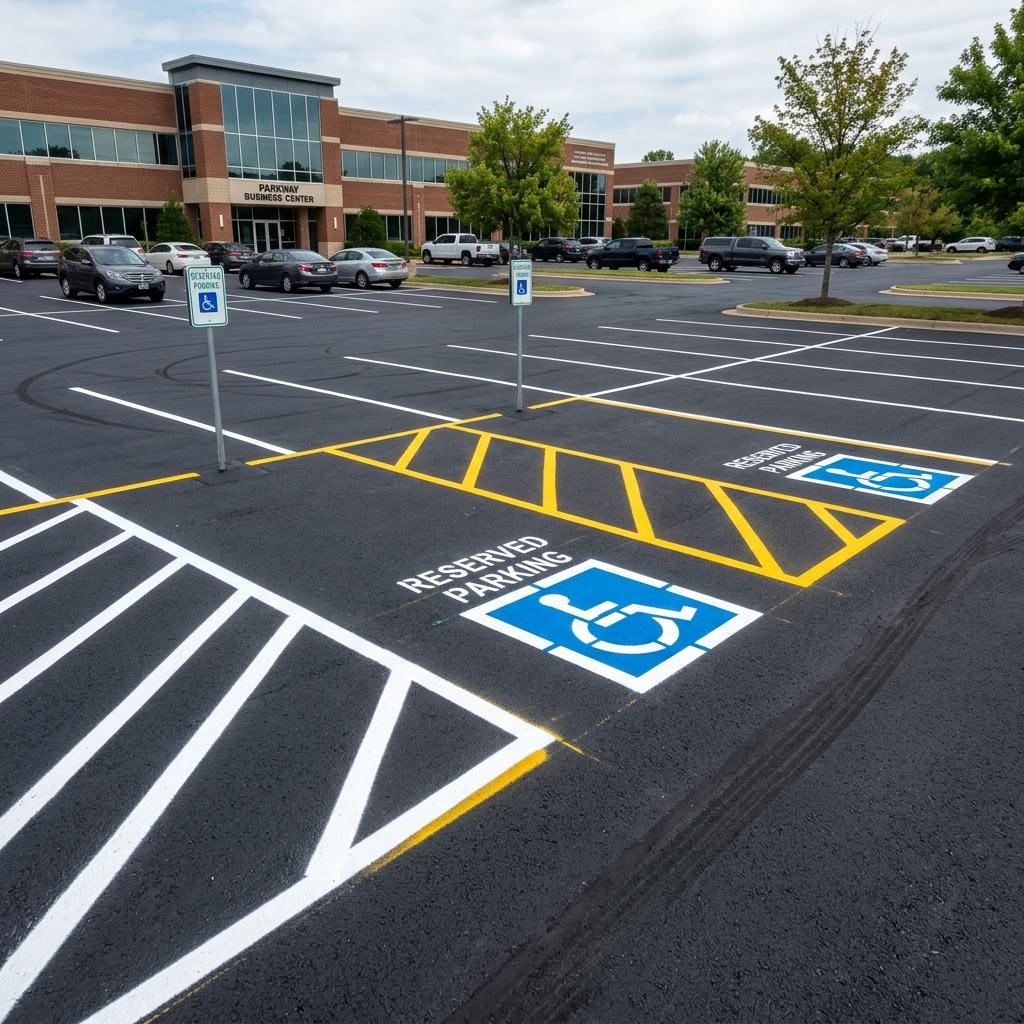
Parking stall layout, directional arrows, fire lanes, crosswalks, and ADA-compliant accessible stalls and access aisles are installed with traffic-grade paint or heat-applied thermoplastic. Layouts are ADA-compliant and materials are rated for weather and vehicle traffic.
DTI installs accessible stall markings, including required signage dimensions, fire lane markings, and crosswalk delineation for commercial and industrial properties. Exterior markings use traffic-grade paint and thermoplastic systems rated for vehicle traffic and weather exposure.
Color-coded safety markings
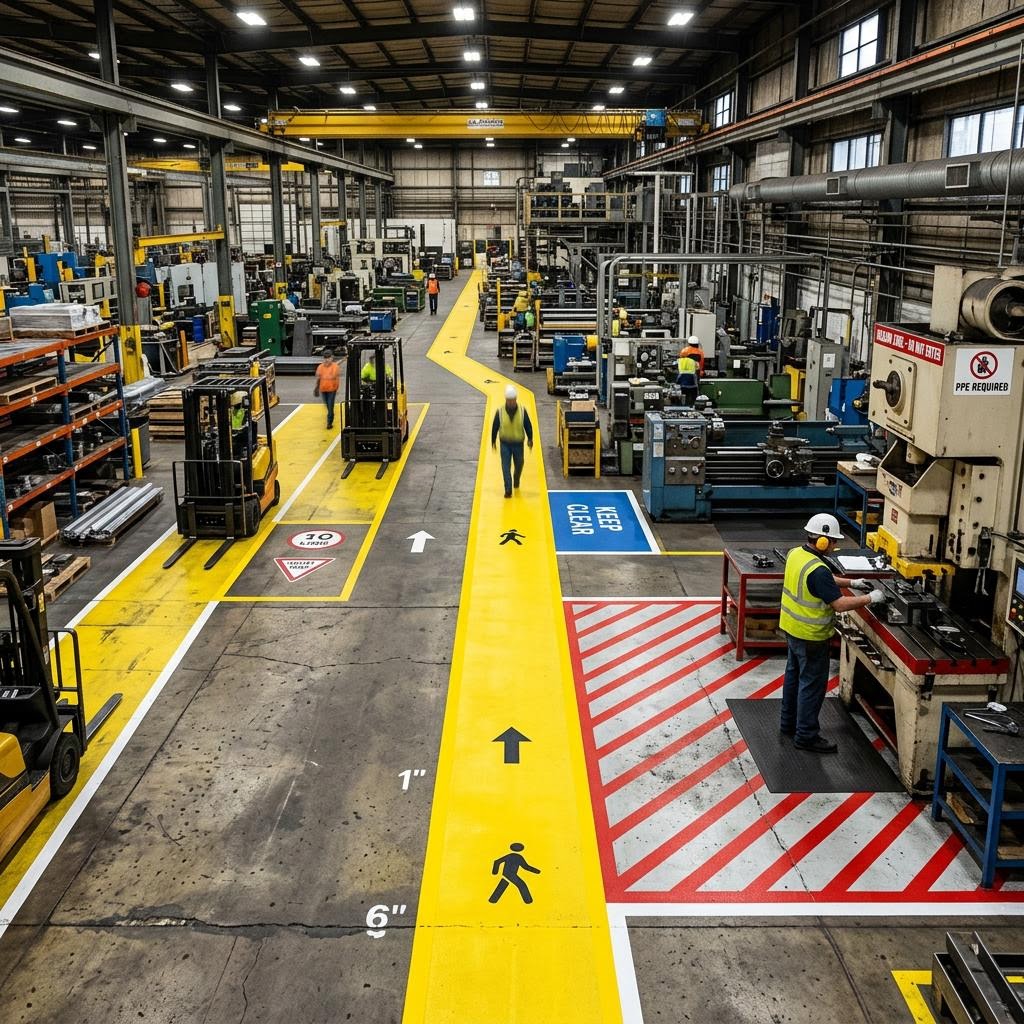
Hazard zones, equipment perimeters, column bases, electrical panel clearances, fire equipment, and egress routes are marked to the standard OSHA-referenced color convention and NFPA clearances where applicable. A standardized color legend keeps egress routes and panels clear.
5S and lean manufacturing floor organization
Facilities running 5S or lean manufacturing programs require precise shadow boxing, equipment footprint marking, and zone identification installed to tight tolerances. DTI has experience marking production facilities to 5S layout specifications — straight lines, consistent widths, clean corners.
Stenciling and numbering
Aisle numbering, bay identification, directional arrows, equipment labels, and custom stenciling for warehouses and distribution centers are installed using durable floor paint that holds up under forklift traffic and regular sweeping.
Industries served
How is line striping installed?
Marking starts with a traffic study and an approved layout, not a paint gun. DTI walks the facility, documents traffic patterns and compliance gaps, chalks and verifies the layout with your safety team, prepares the surface so the marking bonds, then installs the lines, symbols, and stencils in the specified color code and material.
Effective striping combines careful planning, proper surface prep, the right material choice, and a scheduled maintenance plan to keep markings visible and useful. The four application stages — planning, preparation, application, and curing — are incorporated into DTI's five-step protocol below.
- Traffic & Compliance Assessment: We walk the facility with your safety team, document forklift and pedestrian routes, racking positions, egress paths, and fire equipment, and identify where existing markings fail OSHA 29 CFR 1910.22 or ADA requirements.
- Layout & Color Code Approval: A marked-up floor plan defines line widths, aisle clearances, zone boundaries, stenciling, and the color legend. The layout is chalked on the floor and approved before any material is installed.
- Surface Preparation: Failing or obsolete markings are ground or abraded off, and the striping path is cleaned of dust, oil, and curing compounds so the new marking bonds to the substrate instead of sitting on contamination.
- Marking Installation: Lines, symbols, arrows, and stencils are installed with the specified material — epoxy, polyurea/polyaspartic, thermoplastic, or industrial vinyl tape — masked for crisp edges and consistent widths.
- Cure, Inspection & Turnover: Markings cure to the specified return-to-service window, then the layout is walked against the approved plan. You receive the final layout documentation for your safety records.
Surface preparation methods that extend marking life
- Cleaning: remove dust, oil, and contaminants so coatings bond properly.
- Grinding or shot blasting: create a profile that improves adhesion on concrete.
- Priming: apply a primer where needed to improve long-term adhesion, especially on porous slabs.
In many cases, proper surface preparation is the single biggest factor in how long markings remain clear and readable. Following a defined process helps ensure markings perform as expected under real-world conditions. Every line is laid out to an approved plan, installed to consistent widths, and verified before the area returns to service.
Marked to the standard, not to the eye. Permanent aisles and passageways must be appropriately marked and kept clear; accessible exterior layouts and applicable NFPA clearances are part of the documented plan.
How much downtime does line striping require?
Most interior striping is installed during off-shift, night, or weekend windows. Fast-cure polyurea and polyaspartic marking systems return lanes to service in 1 to 2 hours. DTI phases layouts by zone so a portion of the facility keeps operating while marking is installed in the next area.
Existing DTI testimonials describe a full facility restriped over two weekends and ADA stalls and fire lanes restriped overnight with no closure. These are reported client schedules, not a universal installation duration. The operating schedule, approved layout, surface preparation, material, and cure window determine the plan for your facility.
Night and weekend service, phased zone schedules, and fast-cure marking systems are used to limit disruption while production and shipping continue in operating areas.
Can you restripe over faded or incorrect markings?
Yes. DTI's existing process removes or abrades failing or obsolete markings, cleans and profiles the striping path, and installs new lines to an approved layout. The traffic and compliance assessment comes first, so the plan reflects moved aisles, racking, pedestrian routes, and current operations rather than simply repainting an incorrect layout.
For full reconfigurations, existing DTI guidance describes grinding out old lines so ghost markings do not confuse operators, then installing the new layout to the approved drawing.
Maintenance practices that extend life
- Routine checks: inspect markings regularly for fading, scuffs, or peeling.
- Reapplication: schedule touch-ups or restriping before visibility becomes compromised.
- Cleaning: remove dirt and spills so markings remain easy to read.
Consistent maintenance keeps visual controls reliable and reduces the need for emergency repairs. Routine inspections and upkeep help keep the approved layout recognizable over time.
What is the return on professional line striping?
Clear, durable floor markings are one of the most cost-effective ways to cut accidents, speed up workflows, and meet regulatory expectations in industrial facilities. Warehouse line striping — applied with paint, tape, or resin — defines pedestrian routes, vehicle lanes, storage bays, and hazard areas. A safe, productive warehouse depends on proven practices and clearly visible visual controls.
Line striping applies paint, tape, or industrial coatings to floors to create visual cues. Those cues guide people and equipment, organize storage locations, and highlight hazards. Well-designed markings make movement predictable, reduce near-misses between pedestrians and vehicles, and support faster, more reliable workflows. Consistent striping also helps teams locate inventory faster and keeps routine operations running smoothly.
Clearly defined pedestrian walkways keep foot traffic out of forklift routes. Dedicated vehicle lanes and storage outlines reduce obstructions and make traffic flow predictable. The result is fewer conflict points, shorter travel times between work areas, and less time wasted fixing layout confusion. Floor markings are one part of a complete safety program — not a standalone solution.
Reported safety and financial gains
The warehouse guide reports that a large distribution center recorded a 30% drop in accidents after implementing a full layout and marking plan. Other organizations reported faster order fulfillment and tighter inventory control following targeted restriping projects. The distribution center is not identified as a DTI project; this reported result is not a guarantee for another facility.
Applying OSHA recommendations and ANSI color conventions helps build an accountable safety culture. Better control of traffic and hazards can lower insurance exposure, boost employee confidence, and stabilize productivity. Facilities that prioritize clear markings and routine maintenance typically see fewer incidents and smoother operations.
Warehouse floor demarcation for forklift guidance & material separation
The current situation is that there is no form of warehouse floor demarcation in the form of line striping, to either serve as a guide for the forklift operators or to demarcate the finished goods from the raw materials. This makes it difficult for the forklift operators to know where to stack the finished goods and where to pick the raw materials from.
— IMPROVING WAREHOUSE AND INVENTORY MANAGEMENT: Operational Efficiency and Transport Safety, 2012
Efficiency and inventory management
Hiring experienced striping contractors delivers consistent, durable markings and can produce measurable returns: fewer accidents, faster throughput, and less downtime for corrective work. Thoughtful, professionally planned striping clarifies workflows and removes common delays. When routes, storage locations, and work zones are obvious, teams find stock faster, traffic moves predictably, and supervisors can reinforce safe practices with less effort.
Clear storage outlines and bay markings speed locating and staging, reducing search time and improving picking accuracy. Defined lanes and organized zones cut congestion and support smoother material flow, helping inventory control and order fulfillment. Contractors who apply durable materials correctly reduce the need for frequent restriping, while consistent markings support compliance, employee confidence, and a positive safety culture.
How to track effectiveness
- Implement a regular inspection schedule to check visibility and condition.
- Record incidents and near-misses related to markings.
- Gather employee feedback on navigation and workflow.
- Maintain a log of cleaning, touch-ups, and restriping to identify trends and plan updates before problems arise.
From our jobs
Real project applications demonstrate how marking layouts and materials are selected around traffic, cleaning protocols, and operating schedules. The named examples below are California fitness facilities.
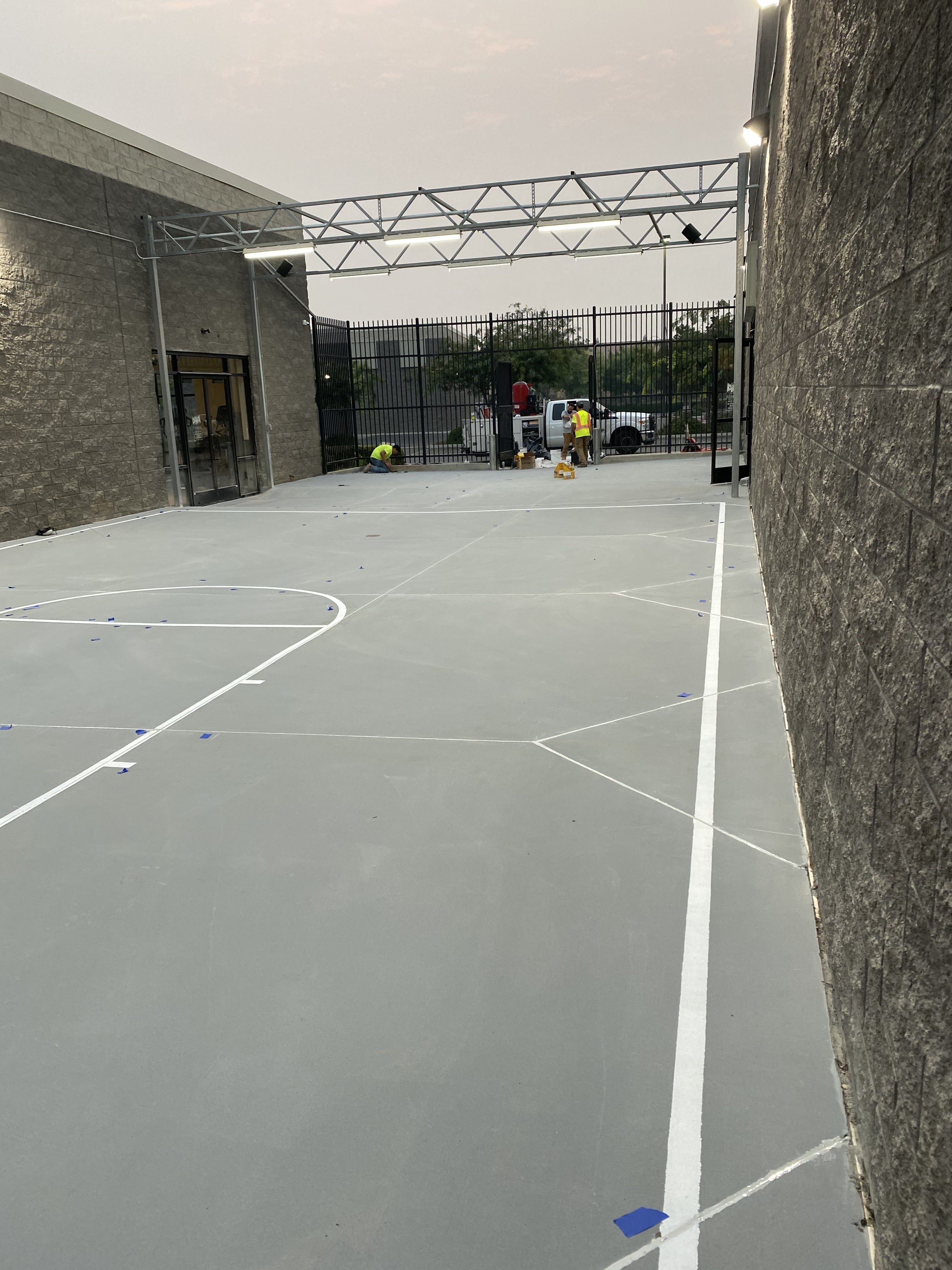
Fitness / Commercial — California
Crush Fitness
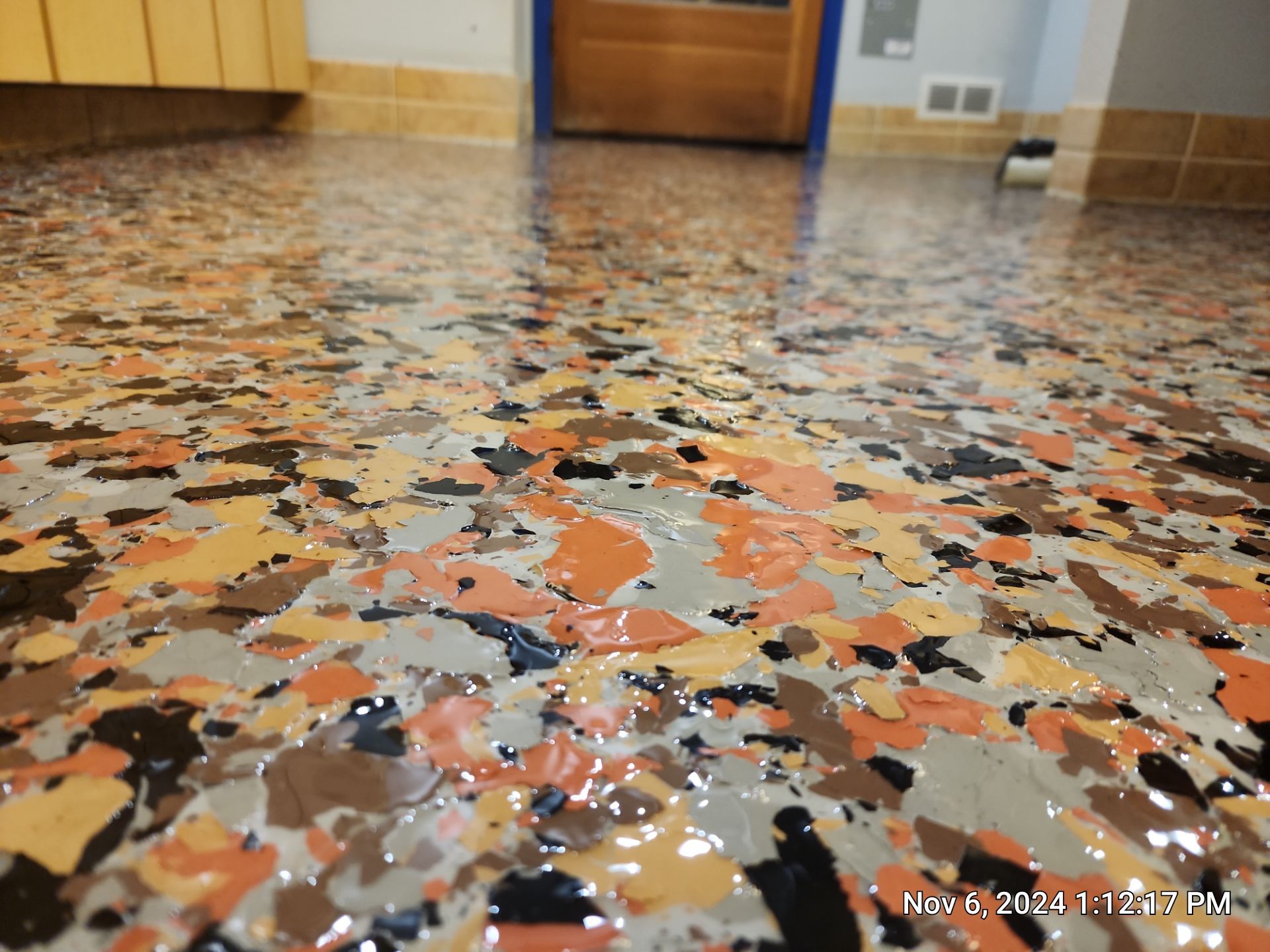
Fitness facilities require floor markings that define activity zones, traffic flow, and safety boundaries — installed on a surface that sees constant foot traffic and regular cleaning with commercial-grade products. DTI marked zone boundaries and safety lines across the facility floor using a durable paint system compatible with the existing concrete surface.
System: Durable floor marking paint, zone delineation
Key requirement: Durability under foot traffic, compatibility with existing floor
Fitness / Community — California
CruFit
Zone marking and traffic flow delineation for a fitness and community facility. DTI coordinated installation to minimize disruption to the facility's operating schedule.
System: Floor marking paint, zone and safety delineation
Key requirement: Schedule coordination, clean layout execution
Client feedback
Our aisle markings were faded to the point that forklift operators were guessing. DTI restriped the entire floor over two weekends and we passed our next safety audit without a single marking finding.
Safety Manager | Distribution Center
They chalked the whole layout and walked it with us before spraying a single line. The pedestrian walkways finally match how people actually move through the plant.
Operations Manager | Manufacturing Facility
Parking lot restripe including ADA stalls and fire lanes, done overnight so we never closed. Lines are still crisp two winters later.
Property Manager | Commercial Campus
Why facilities choose DTI for line striping
Most floor markings fail early for two reasons: the wrong material for the traffic and cleaning environment, or lines painted straight onto a dirty, unprepared slab. DTI treats striping as a coating installation with a compliance requirement attached.
5M+
Sq. Ft. Installed
10+
Years of Experience
100% ICRI
Compliant Surface Prep
99.4%
On-Time Completion Rate
Layout approved before paint
Traffic patterns, aisle clearances, and the color legend are documented and chalked for approval first. Nothing gets installed until the plan matches how the facility actually operates.
Prepared substrate, bonded markings
Old markings are removed and the striping path is mechanically prepped and cleaned, so lines bond to concrete instead of peeling off under forklift tires and scrubber pads.
Installed around your operations
Night, weekend, and phased zone schedules with fast-cure polyurea systems return aisles to service in hours, so production and shipping keep running while marking is installed.
Contractor compliance and industry credentials
- ICRI Compliant — Concrete Surface Prep
- ADA Standards — Accessible Design Layouts
- OSHA Compliant — Aisle & Walkway Marking
- Licensed & Insured — Commercial Subcontractor
- General Contractor — Licensed General Contractor
California contractor license #1003639. DTI's headquarters is at 100 W Valpico Rd, Suite D, Tracy, CA 95376. Call (209) 879-9674.
Choosing a line striping partner
Pick a provider who understands warehouse workflows, specifies proven materials, and communicates clearly about schedules and downtime, like DTI Flooring. Look for demonstrated industrial and warehouse experience, durable products matched to traffic and surface conditions, clear timelines, responsive communication, and minimal disruption.
- What is your experience with warehouse line striping?
- What materials do you use for your markings?
- Can you provide references or case studies from previous clients?
These questions help evaluate capability, material quality, and fit for your site.
Nationwide project support
DTI Flooring supports commercial and industrial floor marking projects across the United States. Facility managers, safety managers, and general contractors can engage DTI for layout development, OSHA and ADA compliance striping, restriping, and full facility reconfigurations — single locations and multi-site programs.
Primary service: Line striping & traffic marking. Project audience: Facility & safety managers, GCs. Coverage: Nationwide project support.
Related reading


Warehouse Floor Joint Design: Why Joints Determine How Long Your Floor Lasts
Joints — not slabs — decide floor life, and they decide where markings fail first.

Industrial Non-Slip Flooring Solutions for Preventing Slips and Falls
Traction, marking, and layout decisions that keep pedestrian routes safe.
How to Choose a Warehouse Floor Coating (Without Paying for It Twice)
A plain-English guide to choosing the right system before you stripe it.
Related services
- Epoxy Flooring Systems
- Polished Concrete
- Concrete Repair & Overlay
- Waterproofing & Moisture Mitigation
Serving commercial and industrial facilities nationwide
DTI works with facility managers, safety managers, and general contractors on line striping and traffic marking projects across the United States — new installations, restriping, and full facility layout reconfigurations.
Request a Project Consultation, schedule a floor assessment, or call (209) 879-9674.
Reference: OSHA and ANSI floor marking color codes and widths
OSHA 29 CFR 1910.22 requires permanent aisles and passageways to be appropriately marked and kept clear. OSHA does not mandate one color or width for every situation. The colors below follow the OSHA-referenced ANSI convention; 2 to 4 inches is industry line-width practice, not an OSHA-prescribed dimension.
| Color | Meaning and typical use | Line-width guidance | Status |
|---|---|---|---|
| Yellow | Caution; traffic lanes, aisles, pedestrian walkways, and traffic paths | Typically 2 to 4 inches for floor striping | ANSI color convention; industry width practice |
| White | Work areas and workstations | Typically 2 to 4 inches for floor striping | Facility color convention; industry width practice |
| Red | Fire protection equipment, emergency areas, and emergency stops | Typically 2 to 4 inches for floor striping | ANSI color convention; industry width practice |
| Orange | Inspection and caution areas | Typically 2 to 4 inches for floor striping | Facility color convention; industry width practice |
| Green | Safety and first aid equipment | Typically 2 to 4 inches for floor striping | ANSI color convention; industry width practice |
| Blue | Informational areas and general signs | Typically 2 to 4 inches for floor striping | ANSI color convention; industry width practice |
The selected layout must still satisfy actual aisle, access, fire, and egress requirements. Use the approved plan and documented legend, with routine inspections, rather than treating a color or a width alone as proof of compliance.
Frequently asked questions
What does OSHA require for warehouse floor markings?
OSHA 29 CFR 1910.22 requires permanent aisles and passageways to be appropriately marked and kept clear of obstructions. OSHA does not mandate a single color or line width. Color coding follows ANSI guidance that OSHA references for hazard communication, and industry practice sets line widths at about 2 to 4 inches.
What do the different floor marking colors mean?
Yellow marks traffic lanes, aisles and pedestrian walkways. White marks work areas and workstations. Red marks fire protection equipment and emergency areas. Orange marks inspection and caution areas. Green marks safety and first aid equipment. Blue marks informational areas. Using one convention across the facility speeds recognition for workers and forklift operators.
How long does line striping last in a warehouse?
Epoxy striping lasts 3 to 5 years in high-traffic interiors. Thermoplastic lasts 5 to 7 years and is used on exterior lots and loading docks. Polyurea and polyaspartic cure fast enough to return to service in 1 to 2 hours. Vinyl tape is for temporary or changing layouts. Surface preparation determines how long any of them stays readable.
How much downtime does line striping require?
Less than most facilities expect. Polyurea and polyaspartic systems return to service in 1 to 2 hours. DTI clients have had a full facility restriped over two weekends and ADA stalls and fire lanes restriped overnight with no closures. Work is phased by zone around the facility's operating schedule.
What is the best line striping solution for warehouse safety compliance?
A professionally installed resinous system over mechanically prepared concrete, laid out to an approved color-coded plan that separates pedestrian walkways from forklift lanes and marks storage and hazard zones. Epoxy suits high-traffic interiors, polyurea where downtime is critical. One distribution center reported a 30 percent drop in accidents after a full marking plan.
Can you restripe over existing faded or incorrect markings?
Yes. Old markings are removed or abraded during surface preparation, the slab is cleaned and profiled, and new lines are installed to the approved layout. DTI's process includes a traffic and compliance assessment first, so incorrect layouts are corrected rather than repainted.