Commercial & Industrial
Waterproofing & Moisture Protection Contractor
Water intrusion is one of the most common causes of flooring system failure and structural damage in commercial and industrial buildings. A coating or flooring system installed over a wet or vapor-transmitting slab will fail - regardless of product quality. DTI provides waterproofing and moisture mitigation as both a standalone service and as part of a complete flooring installation, ensuring the substrate is protected before anything goes on top of it.
5M+
Sq. Ft. Installed
10+
Years of Experience
100% ICRI
Compliant Surface Prep
99.4%
On-Time Completion Rate
Waterproofing & Moisture Protection
Waterproofing Built for Demanding Facilities
Waterproofing is a substrate decision - not a topcoat. DTI specifies the membrane, vapor barrier, and detailing around measured slab conditions, exposure class, and how your facility actually operates rather than applying the same system everywhere.
Engineered Protection
High-Performance Waterproofing & Moisture Protection Systems
Waterproofing is specified by exposure - vapor drive from below, hydrostatic pressure from outside, or weather and traffic from above. DTI recommends a system based on measured slab conditions, exposure class, and service loads.
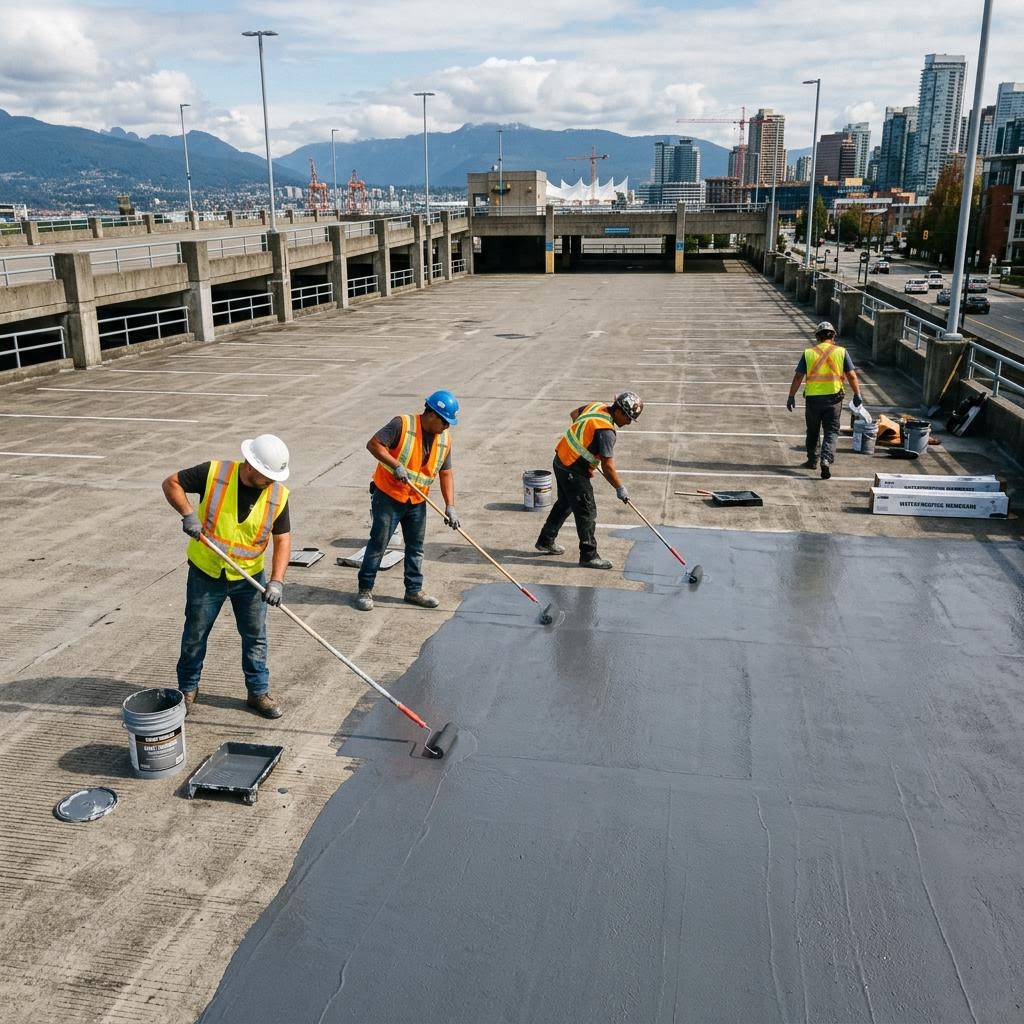 Decks & Traffic Coatings
Traffic-Bearing Deck Membranes
Parking decks and exposed slabs take the full impact of weather, vehicle traffic, and de-icing chemicals. Polyurethane and polyurea membranes flex with the structure under load while maintaining a sealed, traffic-ready surface.
- Flexible Under Vehicle Loading
- Full Drain & Joint Detailing
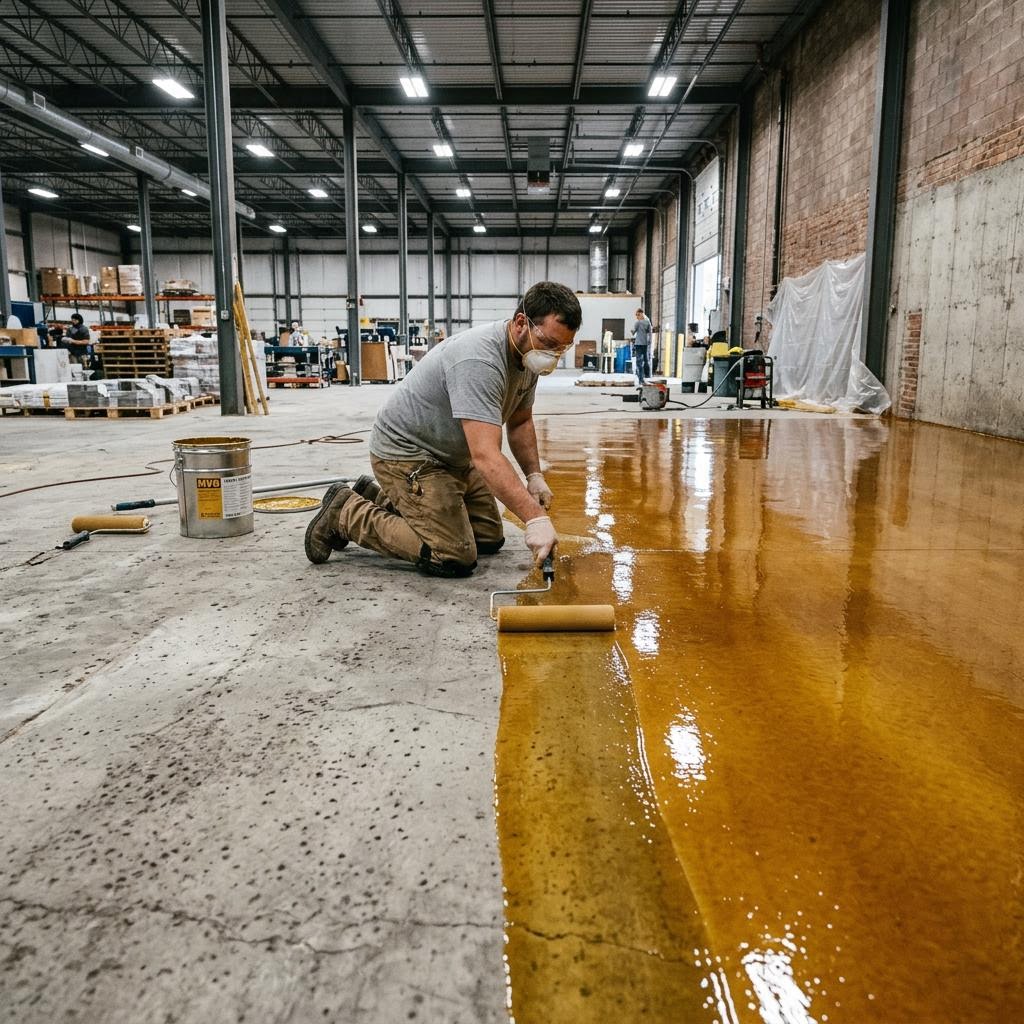 Moisture Vapor Barriers
Moisture Vapor Mitigation
High moisture vapor emission prevents epoxy and resinous flooring from bonding. DTI tests to ASTM F2170 and ASTM F1869, then installs a 100% solids epoxy vapor barrier sized to the measured emission rate.
- ASTM F2170 & F1869 Verified
- Installed Before Any Floor Goes Down
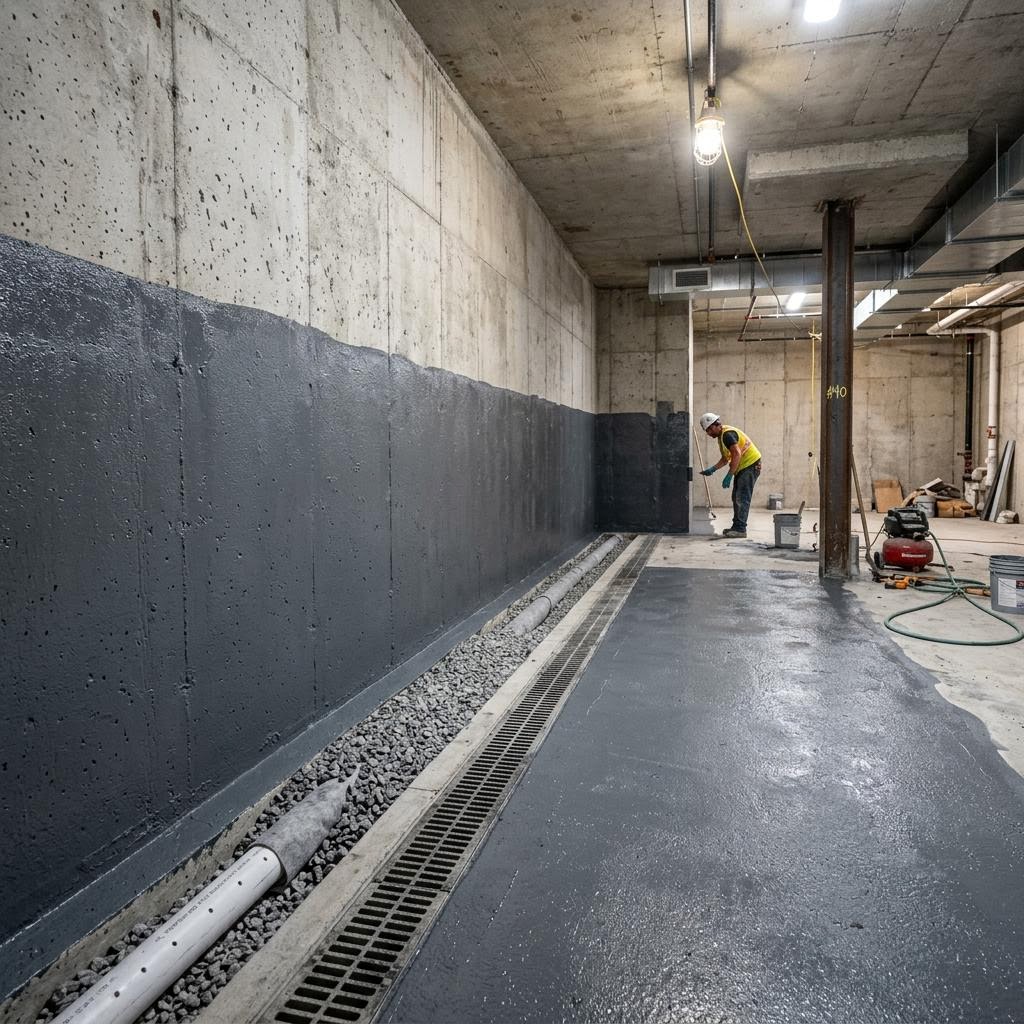 Below-Grade
Below-Grade & Hydrostatic Systems
Basements, mechanical rooms, tunnels, and below-grade slabs face water pushing through the concrete from the exterior. Crystalline and cementitious systems penetrate and seal the concrete matrix for long-term protection.
- Resists Hydrostatic Pressure
- Negative-Side Application Capable
Industries Served
Waterproofing for Parking Structures, Below-Grade Spaces & Commercial Facilities
Testing & Installation Process
Our Waterproofing & Moisture Mitigation Process
How is moisture addressed before flooring is installed? Most commercial waterproofing failures aren't dramatic leaks - they're slow. Moisture vapor transmitting through a concrete slab degrades adhesive bonds, blisters epoxy coatings, and causes resinous floors to delaminate. DTI addresses moisture at the source - through substrate testing, appropriate membrane selection, and correct installation sequencing - rather than applying a topcoat over a problem and waiting for it to fail.
Methodology
Our 5-Step Waterproofing Protocol
Every slab is tested, prepared, and protected before a single square foot of flooring is installed over it.
Substrate Moisture Testing
Slabs are tested to ASTM F2170 (in-situ relative humidity) and ASTM F1869 (calcium chloride moisture vapor emission) to quantify actual conditions before any system is specified.
Surface Preparation
Mechanical preparation to an ICRI-compliant surface profile. Existing coatings, laitance, and contamination are removed so the membrane bonds directly to sound concrete.
Crack, Joint & Detail Work
Cracks are routed and filled, and drains, expansion joints, curbs, and wall transitions are detailed first. This is where most parking deck and below-grade systems fail.
Membrane or Barrier Installation
The specified system is installed at the manufacturer's wet film thickness - epoxy vapor barrier, crystalline or cementitious below-grade system, or traffic-bearing polyurethane/polyurea membrane.
Verification & Flooring Sequencing
Thickness, adhesion, and holiday checks confirm continuity before the floor system, wear course, or aggregate broadcast is applied over the protected substrate.
Tested to ASTM F2170 & ASTM F1869
Concrete slabs emit moisture vapor at varying rates depending on age, mix design, and site conditions. DTI tests relative humidity in-situ (F2170) and moisture vapor emission rate by calcium chloride (F1869) on every project, then installs the appropriate mitigation system before any epoxy or resinous flooring system is applied. This is standard practice on every DTI flooring installation - not an upsell.
Waterproofing as part of a flooring system
On every DTI flooring installation, substrate moisture is assessed before system selection. If moisture vapor emission exceeds the flooring system's tolerance, we specify a mitigation layer first. This prevents the most common cause of premature flooring failure - and it's included in our standard pre-installation process, not treated as a separate discovery after work begins. If you've had a floor fail and aren't sure why, moisture is the first thing we check.
Uncompromising Execution
Why Facilities Choose DTI as Their Waterproofing Contractor
Most waterproofing failures aren't caused by bad materials—they are caused by untested slabs, skipped surface prep, and penetration details left to the last day of the job. At DTI, protection is verified with data and installed in the correct sequence.
Moisture Verified Before Specification
ASTM F2170 and ASTM F1869 results are documented before a system is selected, so the barrier matches the measured emission rate instead of a guess about slab age.
Details Installed Before Field Areas
Drains, expansion joints, curbs, and wall transitions are treated first and inspected. Terminations are where deck and below-grade systems leak, so they are never rushed at closeout.
Thickness & Continuity Confirmed
Wet film thickness, adhesion, and holiday checks are performed during installation and documented at handover, giving GCs and owners a verifiable record of the installed system.
Contractor Compliance & Industry Certifications
Additional Scopes
Exterior Waterproofing & Crawl Space Encapsulation
Beyond decks, slabs, and below-grade interiors, DTI handles the envelope scopes that keep water out of the building in the first place.
Foundations, retaining walls, and below-grade exterior surfaces require durable waterproofing membranes to prevent long-term moisture infiltration. DTI installs fluid-applied and sheet-applied exterior systems appropriate for the exposure class and substrate condition.
For commercial and light industrial buildings with crawl spaces, encapsulation prevents moisture from migrating into the building envelope - reducing humidity, preventing mold growth, and protecting structural members. DTI installs closed-cell vapor barriers with sealed penetrations and perimeter drainage as required.
Verified Client Feedback
Trusted by Facility Managers Nationwide
"Our previous epoxy blistered within a year. DTI tested the slab, showed us the relative humidity numbers, and installed a vapor barrier before recoating. Two years later the floor is still flat and bonded."
Facility Manager | Distribution Center
"They phased our parking structure one level at a time so we never lost more than a third of our stalls. The drain and expansion joint detailing was the most thorough we have seen on a deck membrane."
Property Manager | Mixed-Use Parking Structure
"Water was pushing through the basement mechanical room walls every winter. The crystalline system DTI installed stopped it, and their crew worked around our equipment without a shutdown."
Director of Operations | Municipal Facility
Answers to Common Questions
Commercial Waterproofing Contractor FAQ
What does a commercial waterproofing contractor do?
A commercial waterproofing contractor is a specialized firm that tests concrete substrates for moisture, then installs the membranes, vapor barriers, and sealants that keep water out of a structure. The scope includes ASTM F2170 relative humidity and ASTM F1869 calcium chloride testing, epoxy moisture vapor barrier installation, crystalline and cementitious below-grade waterproofing, traffic-bearing polyurethane and polyurea deck membranes, joint and penetration detailing at drains and wall transitions, and crawl space encapsulation.
Nationwide Project Support
Nationwide Waterproofing & Moisture Protection Contractor
DTI Flooring supports commercial and industrial waterproofing projects across the United States. Facility managers, building owners, and general contractors can engage DTI for slab moisture testing, vapor barrier installation, below-grade waterproofing, and traffic-bearing deck membranes - as standalone scopes or as part of a larger flooring installation.
Primary service: Commercial & industrial waterproofing
Project audience: Facility managers, GCs & owners
Coverage: Nationwide project support
FloorFront
Related Readings
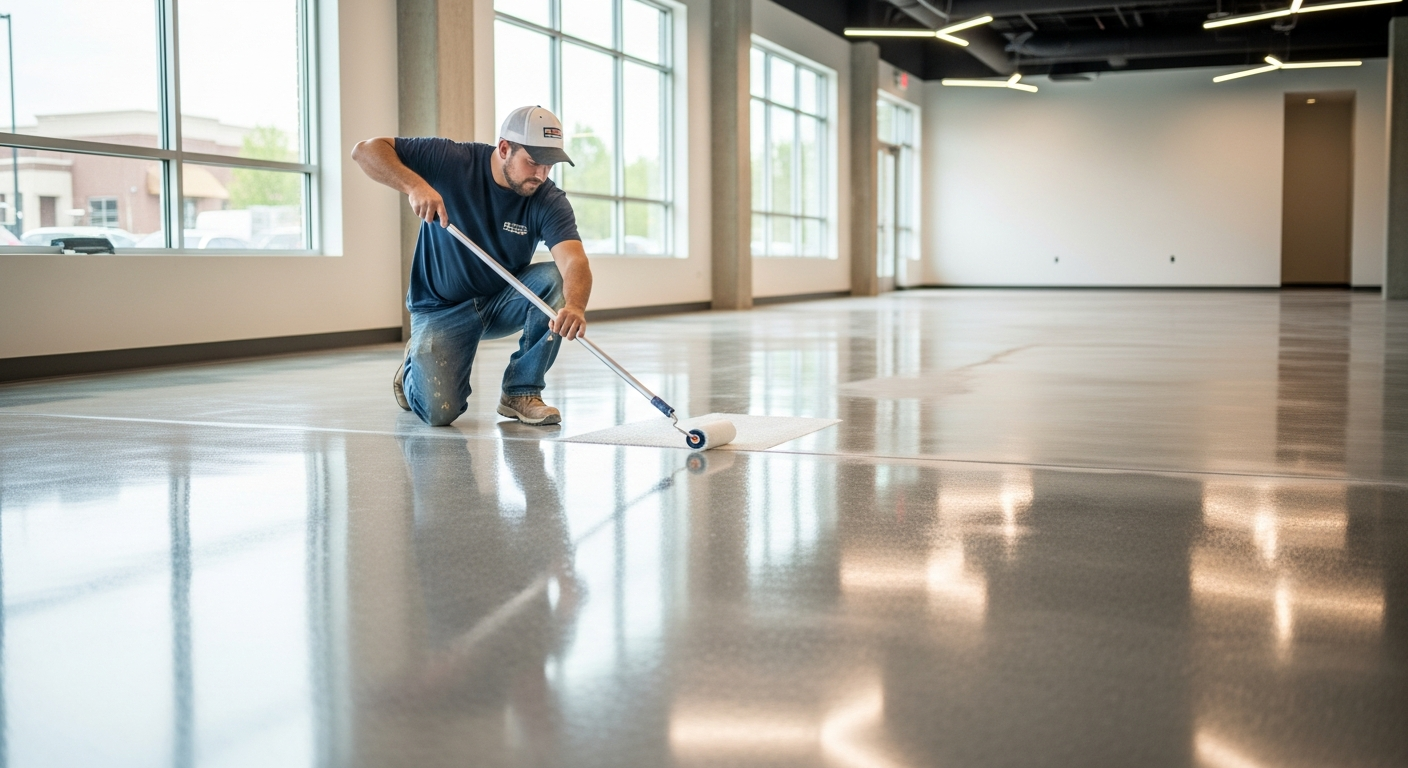
Extend Life of Concrete Flooring with Effective Sealing
How sealing protects concrete from water, chemicals, and premature wear.
Read Article →
Warehouse Floor Joint Design: Why Joints Determine How Long Your Floor Lasts
Joints - not slabs - are where water gets in and floors start failing.
Read Article →
Boost Stain Resistance with Sealing Solutions
Sealer selection for facilities dealing with spills, moisture, and staining agents.
Read Article →
Cold Storage & Dairy Flooring: Why Joints Fail First
What holds up below zero when moisture and thermal cycling attack the slab.
Read Article →Serving Commercial and Industrial Facilities Nationwide
DTI works with facility managers, building owners, and general contractors on waterproofing scopes across the United States - as standalone projects or as part of a larger flooring installation.
Request a Project Consultation