Commercial & Industrial
Concrete Sealing Contractor
Unsealed concrete is porous. It absorbs oil, chemicals, water, and contaminants - and once absorbed, those compounds are nearly impossible to fully remove. Sealing concrete protects the substrate, extends floor life, and significantly reduces ongoing maintenance costs. DTI installs concrete sealing systems for commercial and industrial facilities nationwide, specified by environment, traffic class, and performance requirement.
5M+
Sq. Ft. Installed
10+
Years of Experience
100% ICRI
Compliant Surface Prep
99.4%
On-Time Completion Rate
Concrete Sealing Services
Concrete Sealing Systems Built for Demanding Facilities
A sealer is only as good as the slab it is bonded to and the environment it is specified for. DTI selects the sealer chemistry, prep method, and coverage rate around how your facility actually operates rather than applying the same product everywhere.
Engineered Sealing Systems
High-Performance Concrete Sealing Systems
Sealers are specified by chemistry - penetrating reactive treatments that harden and repel from within, or film-forming topicals that protect and finish the surface. DTI recommends a system based on your environment, traffic class, and maintenance expectations.
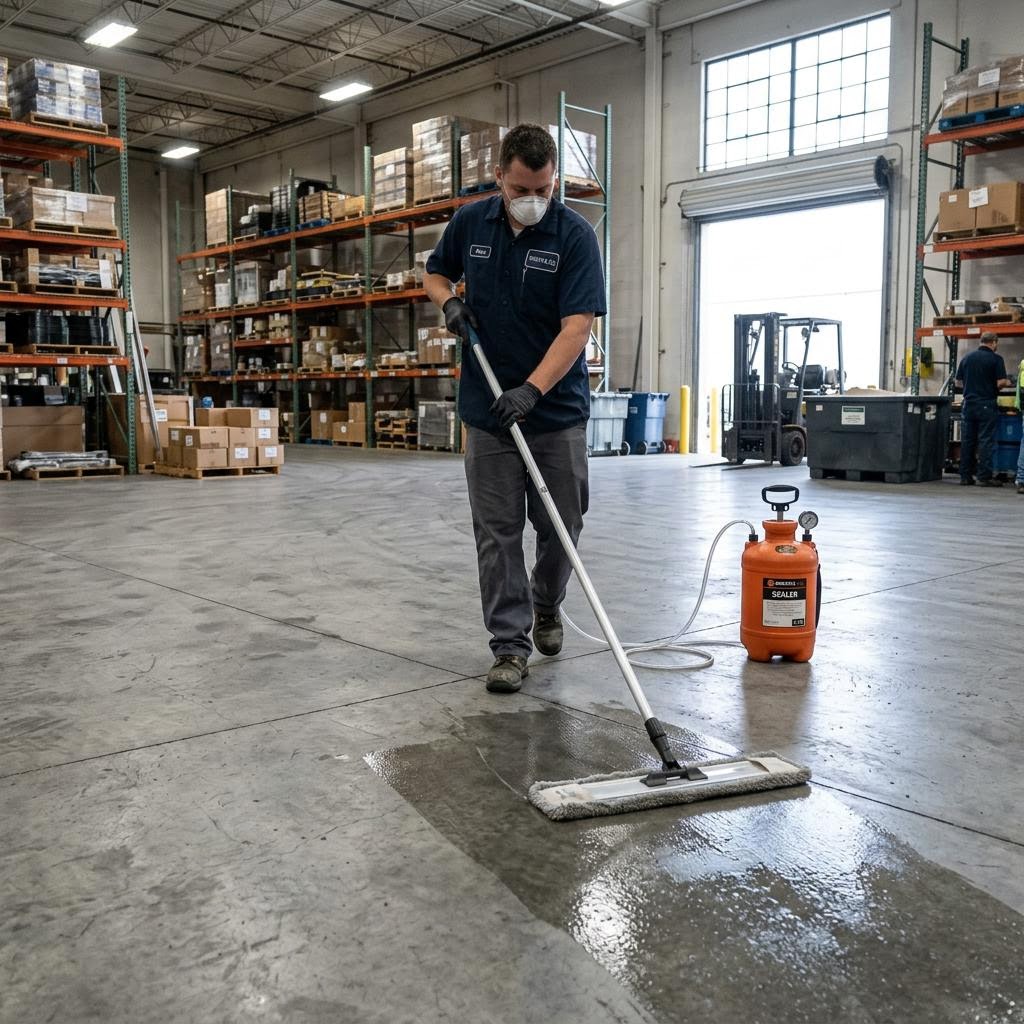 Heavy Industrial
Penetrating Silicate & Siliconate Sealers
Lithium and sodium silicate densifiers react with free lime in the slab to fill the pore structure and harden the surface. Siliconate water repellents shed moisture without leaving a film, so there is nothing to peel under forklift traffic.
- Eliminates Concrete Dusting
- No Film to Peel or Delaminate
 Commercial & Retail
Acrylic & Film-Forming Sealers
Topical acrylics, thin-film epoxies, and polyaspartics build a protective film on the surface with a visible matte-to-gloss finish. They deliver stronger stain and chemical resistance than penetrating systems in appearance-driven spaces.
- Matte to High-Gloss Finish Options
- Superior Surface Stain Resistance
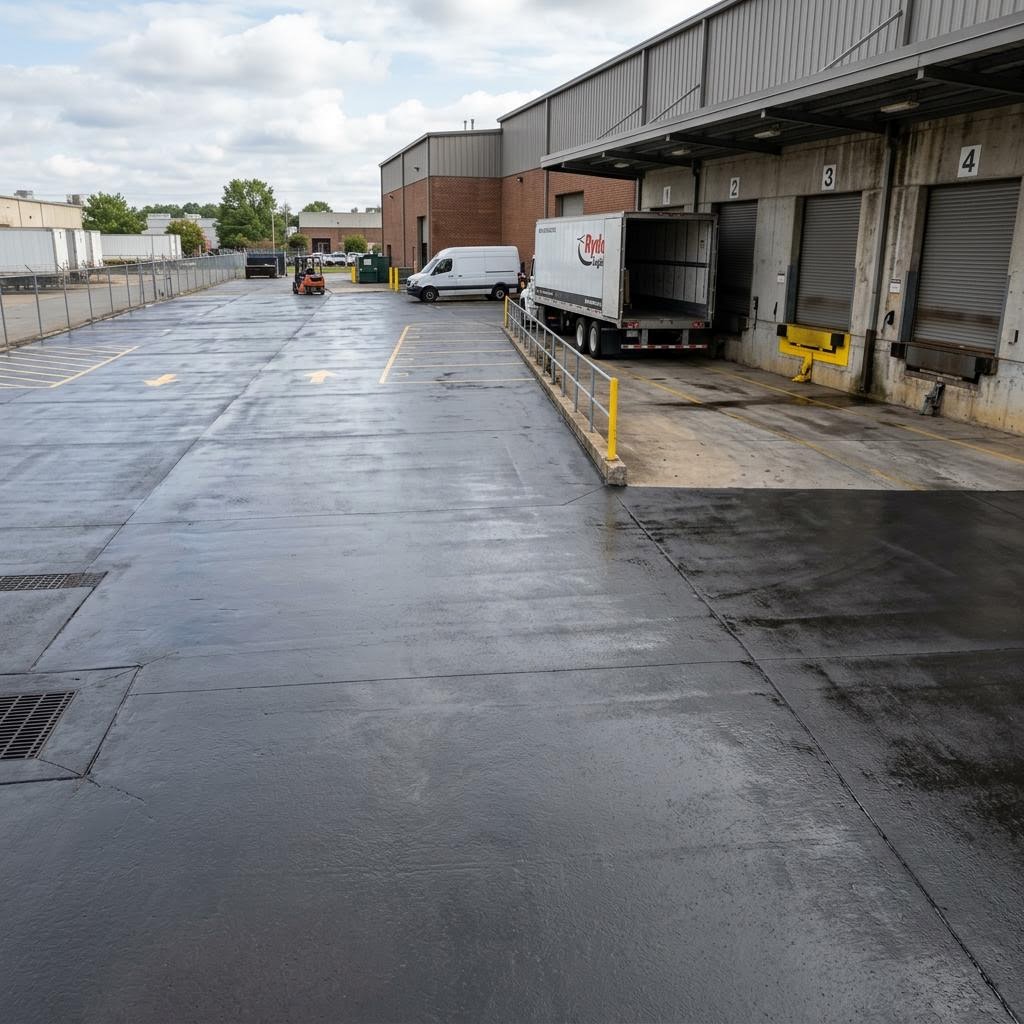 Exterior & Docks
Exterior Penetrating Water Repellents
Silane/siloxane repellents penetrate deep into exterior flatwork, dock aprons, and parking decks to block water and chloride intrusion from de-icing salts without changing surface texture or traction.
- Reduces Chloride & Freeze-Thaw Damage
- No Slip Hazard or Texture Change
Sealer Chemistry
Two Categories of Concrete Sealers
Not all concrete sealers work the same way. The right choice depends on what you need the floor to do.
Densifiers & Guards
Penetrating sealers absorb into the concrete matrix and react chemically with the substrate - they don't leave a film on the surface. Silicate densifiers fill the pore structure of the concrete, increasing surface hardness and reducing dusting. Silane and siloxane guards repel water and chloride intrusion without changing the floor's appearance or texture.
Best for:
Warehouses, distribution centers, parking structures, exterior flatwork, and any environment where a surface film would be a traction or maintenance liability.
Coatings & Films
Topical sealers sit on the surface of the concrete and form a protective film. They provide a visible finish - from matte to high gloss - and offer stronger protection against surface staining and chemical exposure than penetrating sealers. Epoxies, polyaspartics, and polyurethanes all function as topical sealers when applied at thin-film thicknesses.
Best for:
Retail environments, showrooms, food service support areas, and light industrial spaces where appearance matters alongside protection.
Industries Served
Sealed Concrete for Warehouses, Parking Structures & Commercial Facilities
Surface Preparation & Application
Our Concrete Sealing Process
How is concrete sealed? Sealer performance is almost entirely determined by surface prep. A sealer applied to a contaminated, uneven, or structurally compromised slab will fail prematurely - regardless of product quality. DTI assesses the substrate, mechanically opens the pore structure, repairs cracks and joints, then applies a sealer matched to the environment and traffic class.
Methodology
DTI's 5-Step Sealed Concrete Protocol
Every square foot is assessed, mechanically prepared, repaired, and sealed to the specified system.
Substrate Assessment
Evaluate concrete condition, existing coatings, contamination, and moisture vapor emission before any product is specified.
Mechanical Preparation
Shot blasting or diamond grinding to open the concrete pore structure and achieve the correct ICRI surface profile.
Crack and Joint Repair
Fill active cracks and deteriorated joints before sealing. Learn about our repair systems →
Sealer Application
Product selected to match substrate condition, environment, and performance spec, then applied at the manufacturer-specified coverage rate.
Return to Service
Most systems are ready for foot traffic within 2–4 hours and vehicle traffic within 24 hours.
Prep to the profile. Not to the schedule.
Sealers are applied over a mechanically prepared, ICRI-compliant concrete surface profile - never over a slab that was only chemically cleaned. Where moisture vapor emission exceeds the sealer manufacturer's limit, DTI specifies moisture mitigation before sealing rather than trapping vapor beneath a film.
Uncompromising Execution
Why Facilities Choose DTI as Their Concrete Sealing Contractor
Most sealer failures aren't caused by bad product—they are caused by skipped surface preparation and a default spec that ignores the environment. At DTI, every sealed concrete scope starts with a written system specification and mechanical prep on the full floor plate.
Specified to Your Substrate, Not a Default Product
Sealer chemistry is chosen against slab condition, moisture vapor emission, chemical exposure, and traffic class - and the system spec is issued in writing before the project is priced.
Mechanical Surface Preparation on Every Project
Shot blasting or diamond grinding opens the pore structure to an ICRI-compliant profile so penetrating sealers absorb and topical sealers bond. No acid-etch shortcuts.
Honest Guidance on Seal vs. Coat
If a sealer will not meet your chemical, impact, or compliance requirements, we say so before any work starts and spec the coating system your facility actually needs.
Contractor Compliance & Industry Certifications
System Selection
When to Seal vs. When to Coat
DTI will tell you which one your floor actually needs. If a sealer is the right answer, we'll spec a sealer. If you need a full coating system, we'll say so before any work starts.
Applications by Environment
Environments We Serve
Sealer selection changes with the environment. Here is how DTI specifies sealed concrete across the facility types we work in most.
High-bay concrete floors seal well with penetrating densifiers - no film to peel or delaminate under forklift traffic, and the densified surface resists dusting that contaminates inventory and HVAC systems.
Polished and sealed concrete is a standard finish in retail environments. DTI seals polished concrete floors with penetrating guards that protect the surface without adding sheen variation or a plastic appearance.
Chloride intrusion from de-icing salts is the primary cause of long-term concrete deterioration in parking structures. Silane/siloxane penetrating sealers significantly reduce chloride penetration without affecting the surface texture required for vehicle traction.
Concrete in kitchen environments requires a sealer that can withstand daily chemical cleaning and thermal cycling. DTI specifies topical sealers and thin-film polyaspartic coatings for food service support areas where a full urethane cement system isn't required.
Driveways, plazas, loading docks, and exterior slabs benefit from penetrating sealers that repel water and prevent freeze-thaw damage without creating a slip hazard.
Below-grade slabs and controlled environments often carry elevated moisture vapor emission. DTI pairs sealing with moisture mitigation or a specialized flooring system when a sealer alone won't hold.
Verified Client Feedback
Trusted by Facility Managers Nationwide
"Our slab was dusting into product racking and the HVAC filters. DTI ground and densified the floor, and the dusting stopped completely - with no film for the forklifts to tear up."
Facility Manager | Distribution Center
"They sealed our parking deck over two weekends without closing a single level during business hours. Water beads off the surface and the traction is unchanged."
Property Manager | Parking Structure
"We asked for a sealer and DTI told us straight that our kitchen support area needed a coating instead. Honest spec, clean install, back in service the next morning."
Operations Director | Food Service Facility
Answers to Common Questions
Concrete Sealing Contractor FAQ
What does a concrete sealing contractor do?
A concrete sealing contractor is a specialized firm that evaluates slab condition, moisture vapor emission, and contamination, mechanically prepares the surface by shot blasting or diamond grinding, repairs cracks and deteriorated joints, and applies a penetrating or topical sealer selected for the facility environment and traffic class. The work protects the concrete from oil, chemicals, water, and chloride intrusion, eliminates surface dusting, and extends slab service life.
Nationwide Project Support
Nationwide Concrete Sealing Contractor
DTI Flooring supports commercial and industrial concrete sealing projects across the United States. Facility managers, general contractors and project owners can engage DTI for sealer specification, mechanical surface preparation, densification and penetrating or topical sealer application - standalone sealing scopes, multi-site programs, and surface prep as part of a larger flooring installation.
Primary service: Commercial & industrial concrete sealing
Project audience: Facility managers, GCs & owners
Coverage: Nationwide project support
FloorFront
Related Readings
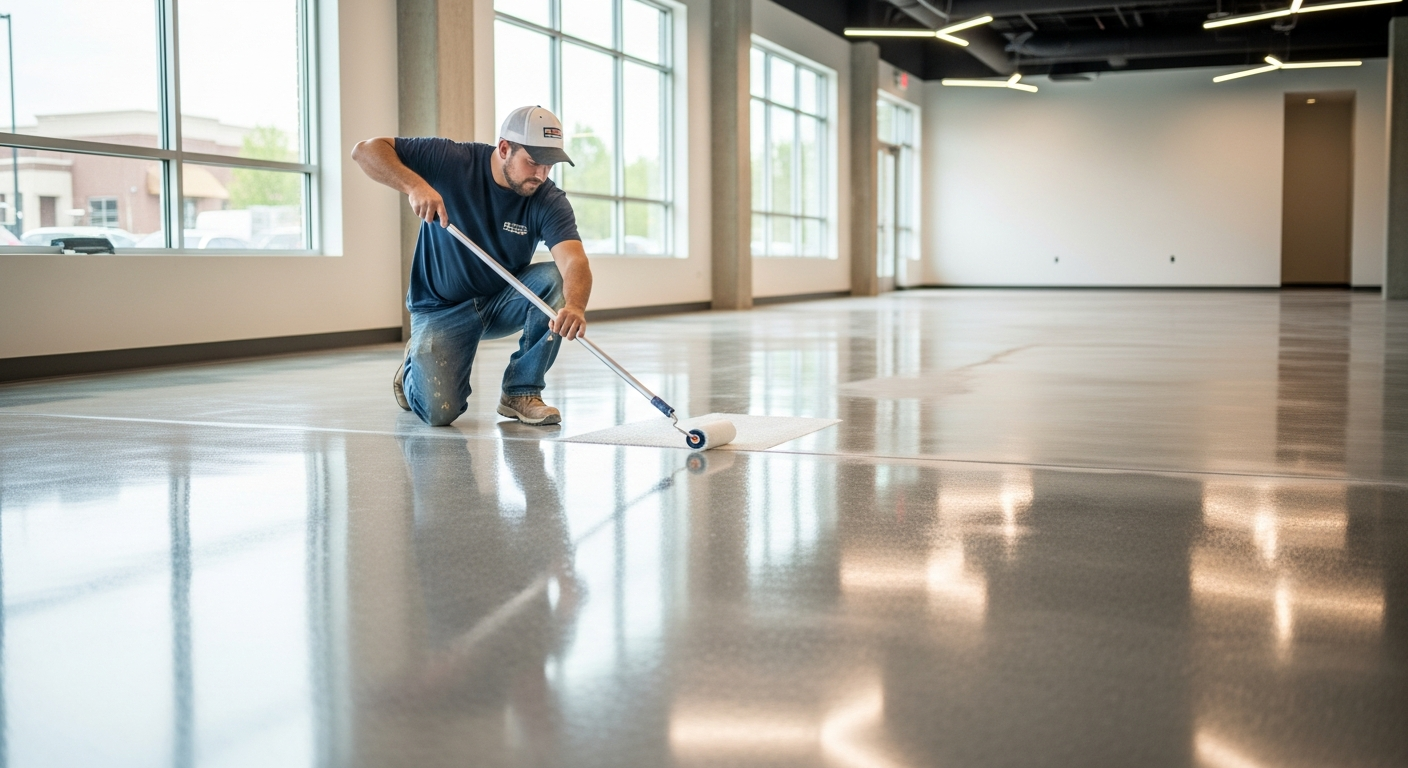
Extend the Life of Concrete Flooring with Effective Sealing
How the right sealer protects the slab and cuts long-term maintenance cost.
Read Article →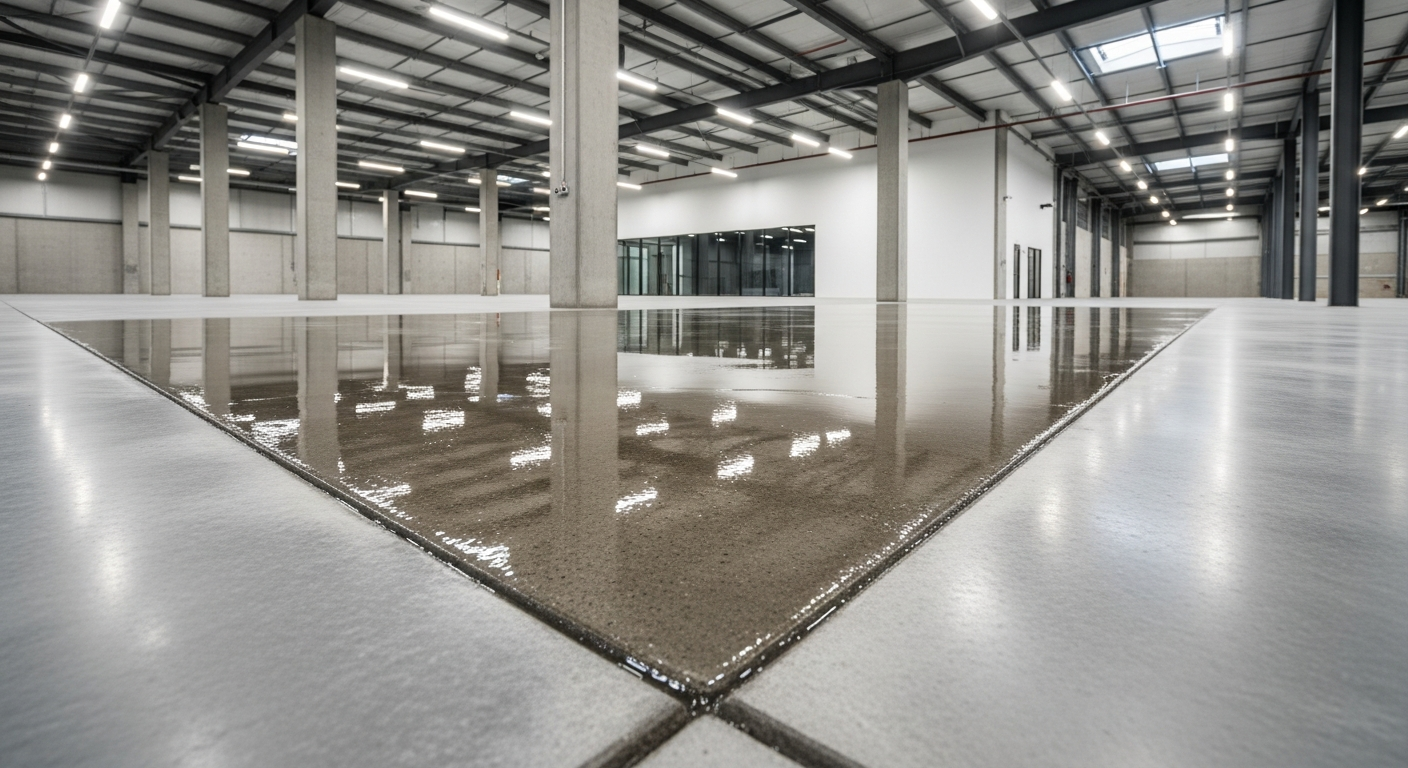
Boost Stain Resistance with Sealing Solutions
Why porous concrete stains - and which sealing systems actually stop it.
Read Article →
How to Choose a Warehouse Floor Coating (Without Paying for It Twice)
A plain-English guide to choosing between polished concrete, epoxy and sealers.
Read Article →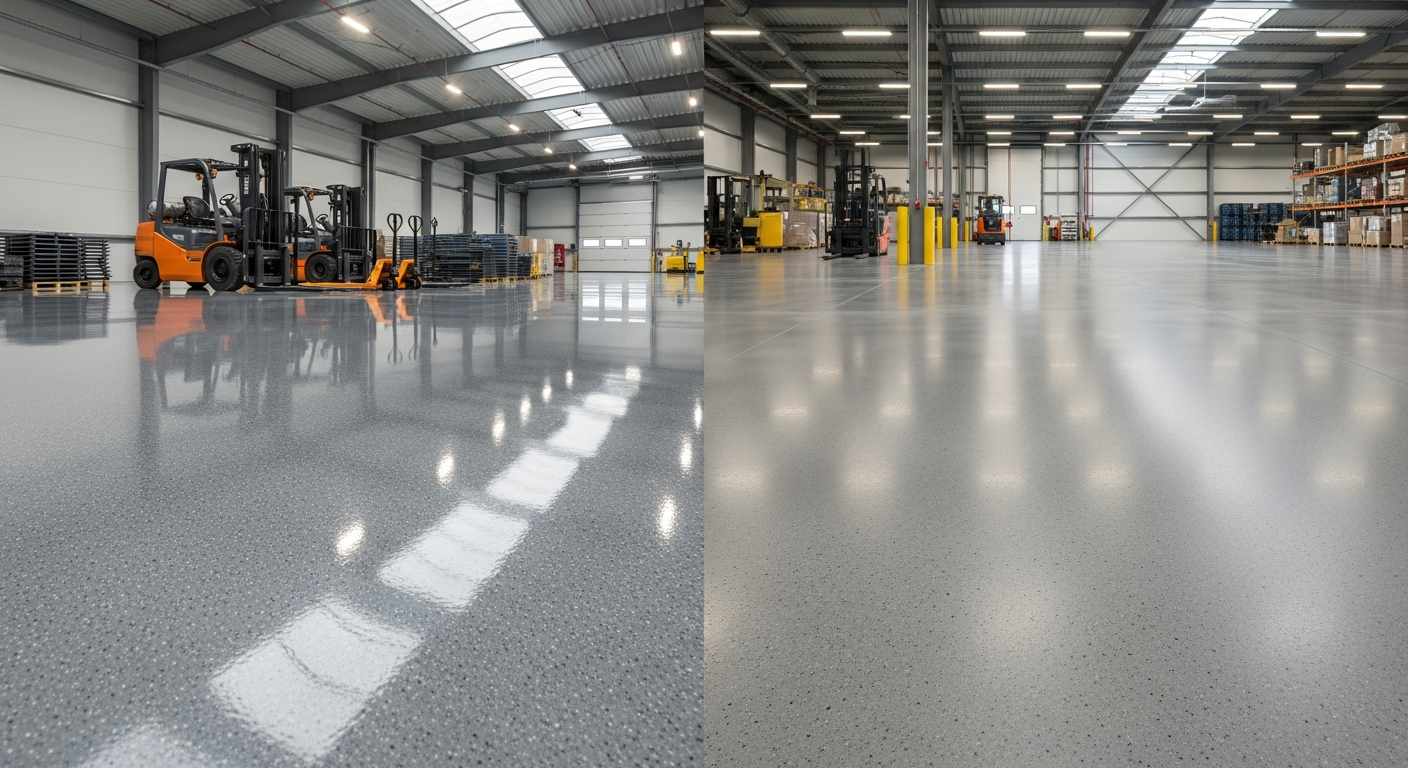
Epoxy vs Polished Concrete: Industrial Flooring Comparison
A comprehensive comparison of epoxy and polished concrete for facility decision-makers.
Read Article →Serving Commercial and Industrial Facilities Nationwide
DTI works with facility managers, property owners, and general contractors on sealed concrete scopes across the United States - standalone sealing projects and surface prep as part of a larger flooring installation.
Request a Project Consultation