Residential Garage Floor Coatings:
Colors, Flake Blends, and Hot Tire Resistance
Choose among 3 garage finish families: solid pigments, decorative flake and metallic effects. Compare physical samples under your garage lighting, then select a complete coating system for sunlight, moisture and vehicle use. Hot-tire resistance depends on the specified product, preparation and cure, not the word epoxy or polyaspartic alone.
By Alexi Cortez · Updated:
The applicable DTI garage system has not been confirmed. The finish families shown are options to evaluate, not a fixed DTI build. Select the primer, repair materials, base coat, finish and topcoat together for the slab, moisture, temperature, maintenance and intended vehicle use.
5M+
Sq. Ft. Installed
10+
Years of Experience
100% ICRI
Compliant Surface Prep
99.4%
On-Time Completion Rate
Residential Garage Floor Solutions
Garage Floor Coatings Built for Demanding Homes
The applicable DTI garage system has not been confirmed. The finish families shown are options to evaluate, not a fixed DTI build. Select the primer, repair materials, base coat, finish and topcoat together for the slab, moisture, temperature, maintenance and intended vehicle use.
Engineered Systems
High-Performance Garage Floor Coating Systems
The applicable DTI garage system has not been confirmed. The finish families shown are options to evaluate, not a fixed DTI build. Select the primer, repair materials, base coat, finish and topcoat together for the slab, moisture, temperature, maintenance and intended vehicle use.
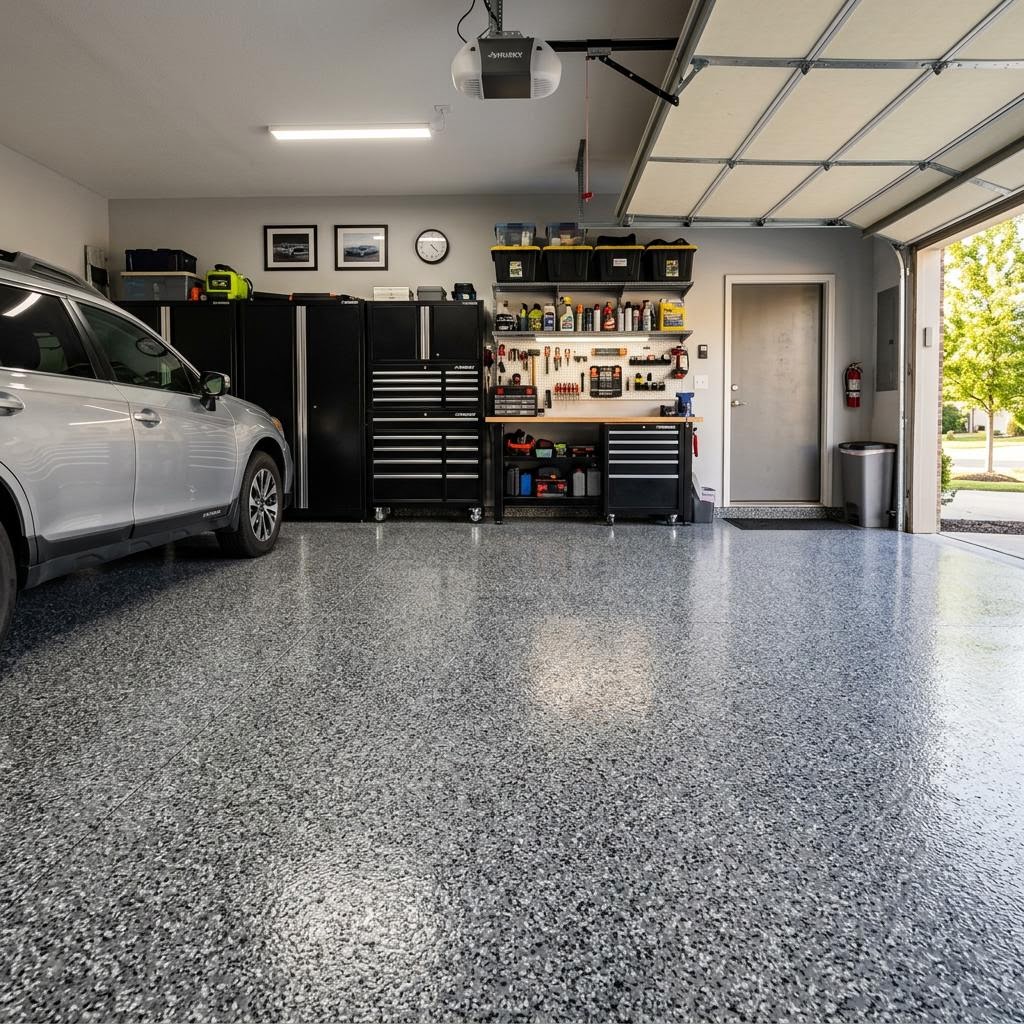 Option to evaluate
Flake finish option
Full-flake appearance is an option to evaluate. Confirm compatible base and topcoat, coverage, texture and available blends with the selected manufacturer; it is not a confirmed DTI build.
- Review product-specific hot-tire and UV data
- Confirm finish samples and availability
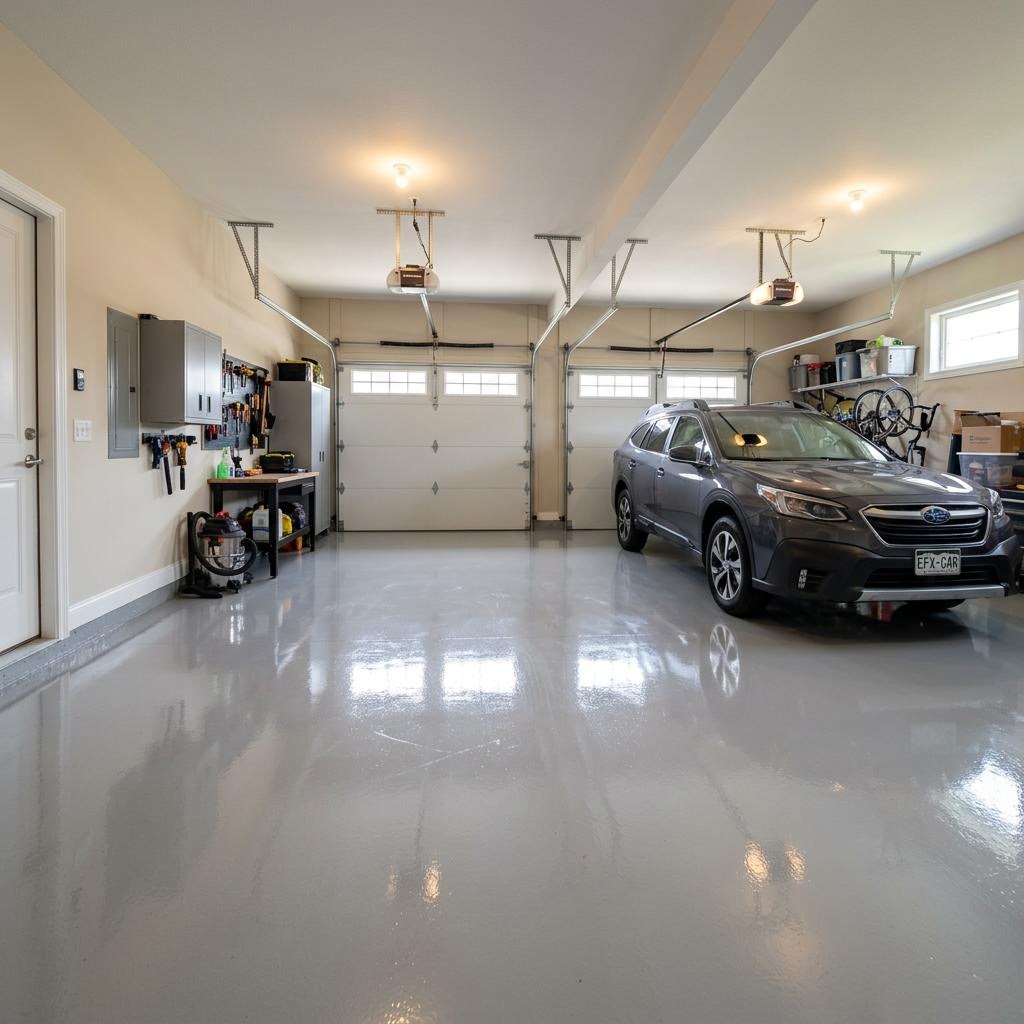 Option to evaluate
Solid-color finish option
Solid-color appearance is an option to evaluate. Confirm the complete resin system, pigment, cleaning requirements and release criteria rather than assuming a particular chemistry or service time.
- Review product-specific hot-tire and UV data
- Confirm finish samples and availability
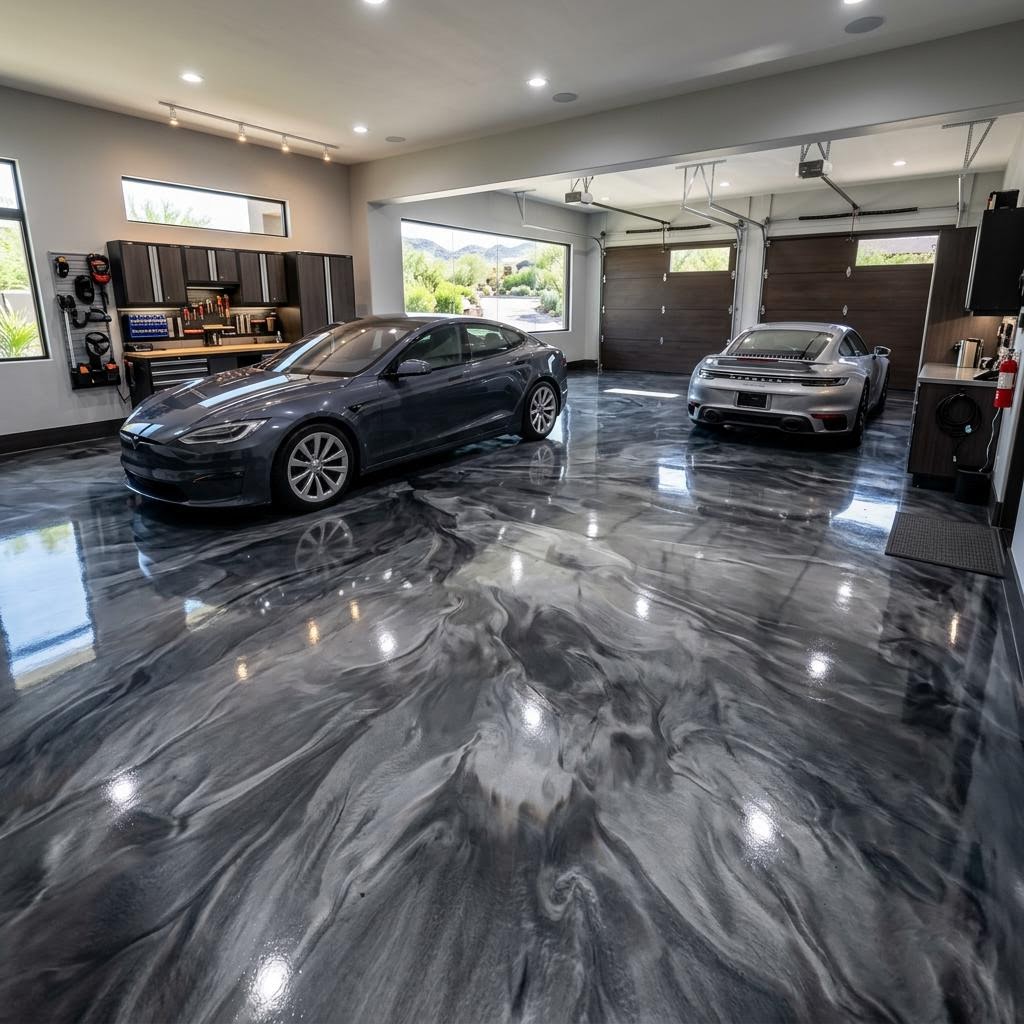 Option to evaluate
Metallic finish option
Metallic appearance is an option to evaluate. Review a representative sample and the complete system's suitability for the garage; appearance alone does not establish durability or vehicle resistance.
- Review product-specific hot-tire and UV data
- Confirm finish samples and availability
What colors are available for a residential garage floor?
Solid colors create a single-color field, such as gray or tan. Use the selected coating manufacturer's chart to define the pigment and confirm its availability. A sample shows how lighting, texture and the clear coat affect the result; a screen image is not a color standard.
Decorative flake combines colors within a broadcast layer. Compare gray-black-white neutrals, tan-brown earth tones, blue-gray combinations and marble-like effects as visual directions, not a promised DTI stock list. Confirm the actual blend, sample, size and compatible resin before approving the work.
One flake manufacturer's sheet lists over 150 color-styles and illustrates 1-inch, 1/4-inch, 1/8-inch and 1/16-inch profiles. That supplier range is not DTI's inventory or a guarantee that every option is available for your project. A 1/4-inch sample and a 1/8-inch sample make the scale difference easier to judge.
The same sheet gives approximate 5–7 square feet per pound for full-broadcast 1/4-inch or 1/8-inch flake, 25–50 for heavy partial coverage and 50–200 for light coverage. These are application guidelines, not a project quantity or resin coverage rate. Its clear-topcoat recommendation is to encapsulate the flake and provide a wearing surface.
Metallic finishes use reflective pigments for a marbled or pearlescent effect. Agree on a representative sample and acceptable variation, rather than expecting an exact reproduction. Review the complete resin and clear-coat system for sunlight and vehicle exposure; a clear coat does not automatically make an underlying pigment or resin colorfast.
| Color family | Appearance to review | Dirt and tire-mark visibility | Texture decision |
|---|---|---|---|
| Solid color | A single pigment selected from an approved chart. | Contrast with dust and marks depends on the chosen color. | Evaluate compatible texture with cleaning and wet-entry conditions. |
| 1/4-inch full flake | Larger multicolor speckle with dense broadcast. | Variegation can make everyday soil less conspicuous. | Review the finished clear-coated sample, not loose flake. |
| 1/8-inch full flake | Finer speckle; compare beside the larger profile. | The blend and contrast matter more than a universal ranking. | Smaller flake alone does not establish traction or smoothness. |
| Partial flake | Pigmented base remains visible between scattered chips. | Visibility changes with broadcast density and base color. | Agree on coverage and the complete topcoat texture. |
| Metallic | Reflective, marbled variation unique to application. | Lighting and gloss affect visibility of dust and tire marks. | Evaluate a suitable additive where specified; no finish prevents every slip. |
Manufacturer flake technical data: profiles, approximate coverage and lightfastness
Explore decorative flake systems, residential homes, residential communities and HOAs and parking garages.
Which garage floor coating prevents hot tire pickup?
Specify resistance, not a chemistry guarantee
Hot-tire pickup means coating releases or lifts where vehicle tires contact it. Bond, contamination, moisture, film build and cure all need review. Tire marks, discoloration and loss of adhesion are different problems, so diagnose the actual damage instead of assuming every mark is heat failure.
Ask for the selected system's written vehicle-use and hot-tire guidance. A high-solids epoxy or polyaspartic label, or a clear topcoat alone, does not prove the installed assembly will resist every tire or exposure. Review base coat, flake, clear coat and substrate preparation together.
One reviewed polyaspartic sheet describes UV stability and says it develops high stain and hot-tire resistance after 48 hours. Those statements concern that formulation, not every polyaspartic, every epoxy or an identified DTI product. They do not guarantee no yellowing of underlying layers or no tire-related damage.
Separate installing, walking and parking
That same product sheet allows foot traffic after 2–4 hours, rolling loads and wet cleaning after 8–12 hours, and vehicular loads after 24–48 hours. It notes that thicker layers need more hardening time. These are topcoat-specific examples, not a complete installation duration or full-system cure table.
The existing installation overview's 48–72-hour parking window is planning guidance, not release authorization for every system. Confirm the exact products, thicknesses, site conditions and restrictions in writing. The complete assembly controls; the fastest layer does not accelerate a slower primer, repair or base coat.
A one-day application does not mean same-day parking. Keep vehicles off until the installed system is released for the intended load and exposure. Do not extrapolate a universal epoxy waiting period, tire temperature or hot-tire rating from a different coating's sheet.
Check sunlight, slab condition and future care
Ask separately about sunlight-related color change and hot-tire contact. UV resistance of one clear coat is not proof that every resin, pigment or decorative flake beneath it has identical lightfastness. The flake sheet reports differing color lightfastness ratings and advises reviewing the complete system for the environment.
Existing paint, sealers, oil, moisture, cracks and moving joints need assessment before coating. A repair material or test appropriate to one slab may not resolve another slab's condition. Agree on preparation, moisture acceptance, repair details and any exclusions before choosing the finish.
For maintenance, follow the installed coating's care guide: remove loose dirt, respond promptly to spills, use approved cleaner and equipment, and repair damage. One manufacturer warns that aggressive chemicals can stain, dull or soften a finish and abrasive cleaning heads can scratch it. Do not interpret easy cleaning as immunity to oil, brake fluid or road chemicals.
Manufacturer polyaspartic data: UV statements, hot-tire development and traffic release
Manufacturer maintenance guide: spills, damage and cleaning restrictions
Wheel exposure in fire-station apparatus bays · Start a FloorQuote inquiry
Sources
Industries Served
Garage & Residential Coatings for Homes, HOAs & Communities
Installation Process
How a Professional Garage Floor Is Installed
Why do garage floor coatings fail? No coating is guaranteed against peeling, hot-tire pickup or yellowing. Performance depends on the complete selected system, preparation, slab condition, temperature, cure and maintenance. Review written product-specific hot-tire and UV guidance; a polyaspartic label alone does not establish performance or a DTI specification.
Methodology
Five Garage System Planning Steps
The applicable DTI garage system has not been confirmed. The finish families shown are options to evaluate, not a fixed DTI build. Select the primer, repair materials, base coat, finish and topcoat together for the slab, moisture, temperature, maintenance and intended vehicle use.
Consultation & Moisture Check
Review the slab, intended use, moisture testing requirements and finish samples before selecting a system.
Diamond Grinding
Choose mechanical preparation and acceptance criteria from the selected manufacturer's requirements and actual substrate.
Crack & Spall Repair
Assess cracks, joints and spalls; select compatible repair materials and movement details for the project.
Base Coat & Flake Broadcast
Specify the base coat and decorative finish together. Flake, solid and metallic finishes may need different builds.
Scrape, Vacuum & Topcoat
Select a compatible topcoat where required and agree on cure and release criteria. Do not assume a universal polyaspartic topcoat or hot-tire performance.
Surface prep is the whole job.
Surface preparation and moisture assessment must match the selected system and slab. A typical 15+ year lifespan depends on the system, slab condition, temperature and maintenance; it is not a DTI promise or warranty. Moisture & waterproofing services →
Damaged slab? Repair comes first.
Heavily spalled, sunken, or previously patched slabs may need resurfacing before coating. Assess the slab and selected system before work. Concrete repair & overlay →
Uncompromising Execution
Why Homeowners Choose DTI as Their Garage Floor Coating Contractor
The applicable DTI garage system has not been confirmed. The finish families shown are options to evaluate, not a fixed DTI build. Select the primer, repair materials, base coat, finish and topcoat together for the slab, moisture, temperature, maintenance and intended vehicle use.
Commercial-Grade Prep in a Home Garage
A damaged or previously coated slab needs assessment before selecting a system. Determine removal, contamination treatment, moisture response and compatible repairs from the actual slab and manufacturer requirements. Do not assume one repair resin or primer suits every garage.
Clean, Respectful Job Sites
HEPA-filtered vacuums capture grinding dust at the source, walls and door tracks are masked, and the garage is swept and returned to you ready to load back in.
Honest Specs and Written Quotes
You get an itemized quote after a site inspection, a clear cure-and-return-to-service schedule, and a straight answer if your slab needs repair before coating.
Contractor Compliance & Industry Certifications
System Selection
DIY Garage Kit vs. Professional Installation
The applicable DTI garage system has not been confirmed. The finish families shown are options to evaluate, not a fixed DTI build. Select the primer, repair materials, base coat, finish and topcoat together for the slab, moisture, temperature, maintenance and intended vehicle use.
Complete Home Services
Beyond the Garage: Additional Residential Services
No two homes are alike - and your flooring shouldn't be either. Alongside garage coatings, DTI handles the rest of the concrete and finish work homeowners ask us for most.
Waterproofing & Ingress Protection
Basement waterproofing against leaks and mold, exterior sealing to stop moisture intrusion, and ingress protection that safeguards structural integrity.
Waterproofing & Protection →Decorative & Stained Concrete
Decorative overlays that mimic marble, granite, or stone, plus staining and patterned finishes that add color and personality to patios, entries, and interior slabs.
Specialized Flooring →Interior Polished Concrete
Sleek, modern, easy-to-maintain polished concrete for kitchens, living areas, and finished basements - long-lasting durability with contemporary style.
Polished Concrete →Concrete Repair & Overlay
Patching, resurfacing, and overlay of cracked, spalled, or sunken slabs so the finished surface is level, sound, and ready for a coating system.
Repair & Overlay →Driveway & Patio Sealing
Penetrating and film-forming sealers that protect exterior concrete from road salt, freeze-thaw damage, oil, and UV weathering.
Concrete Sealing →Maintenance & Restoration
Preserve your investment with routine cleaning and sealing, spot repairs, and restoration of coated and polished floors to like-new condition.
Maintenance Programs →Verified Client Feedback
Trusted by Homeowners & Community Managers
"They ground the whole slab down before touching it with product, patched two long cracks, and the flake finish came out perfect. Two years and a lot of hot tires later, there is not a single lifted spot."
Homeowner | Three-Car Garage
"We coated the garages across our community in phases and DTI kept every unit on schedule. Residents got clear notice, the crews cleaned up daily, and the finish is identical from garage to garage."
Property Manager | Residential HOA
"I priced out a big-box kit first. Glad I did not. The metallic floor in my shop looks like a showroom, wipes clean after oil changes, and the quote matched the final invoice exactly."
Homeowner | Workshop & Car Collection
Answers to Common Questions
Garage Floor Coating Contractor FAQ
How long does a garage floor coating take to install?
Will the coating peel or turn yellow from hot tires?
How much does a residential garage floor coating cost?
Can you coat a garage floor that is cracked, stained, or already painted?
How do I clean and maintain a coated garage floor?
What does a garage floor coating contractor do?
A garage floor coating contractor assesses the slab, plans preparation and compatible repairs, and installs the selected resinous system. Base coat, decorative finish, topcoat and return-to-service requirements must be specified together for the project; no particular DTI garage build is confirmed here.
Nationwide Project Support
Residential Garage Floors in Northern California
DTI installs residential garage floor coatings out of our Tracy, California shop, serving homeowners and residential communities throughout Northern California - including Tracy, Stockton, and Sacramento. Multi-unit HOA and residential community garage programs are quoted case by case, and our commercial and industrial flooring divisions support projects nationwide.
100 W Valpico Rd, Ste D, Tracy, CA 95376 · (209) 879-9674
Primary service: Residential garage floor coatings
Project audience: Homeowners, HOAs & property managers
Coverage: Northern California residential; nationwide commercial
FloorFront
Related Readings
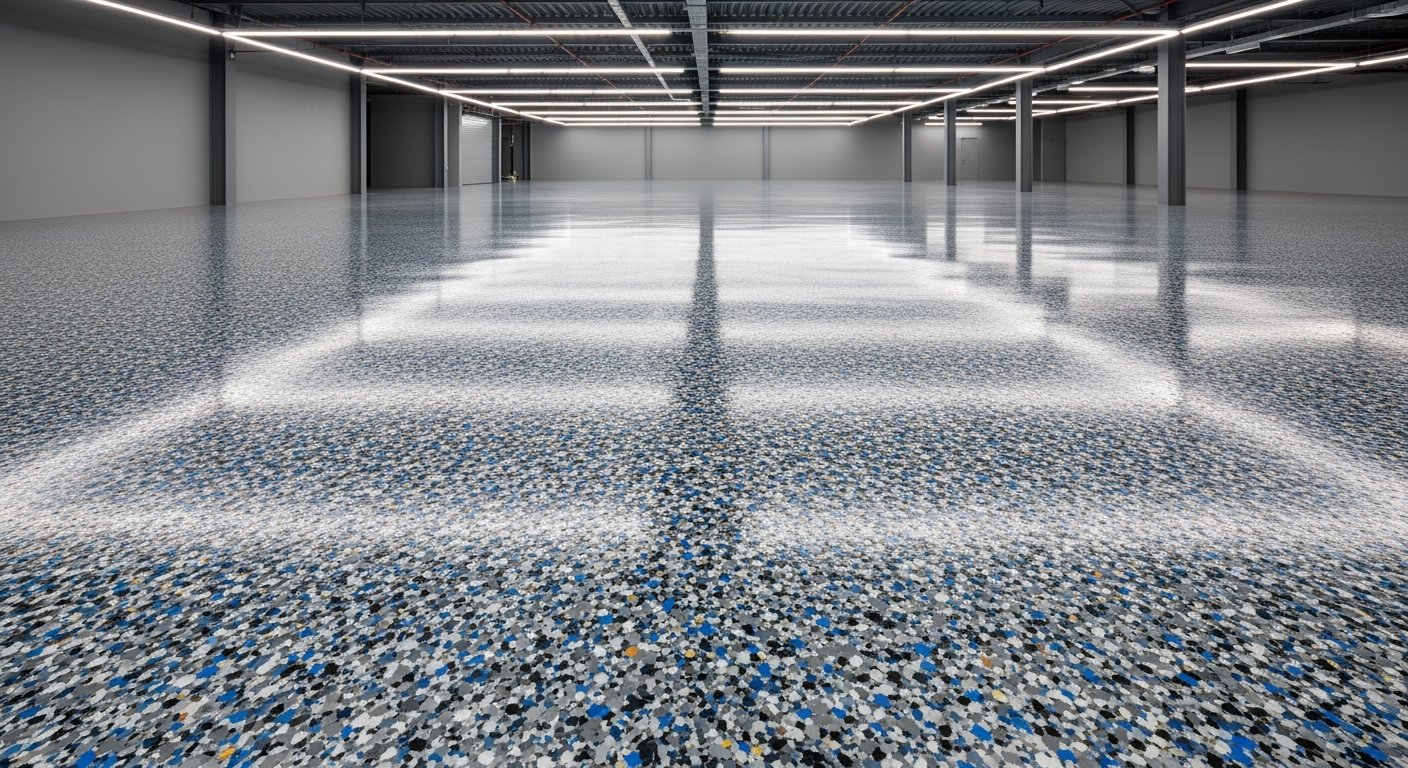
Decorative Epoxy Flake Flooring Systems: Complete Guide
How flake systems are built, what they cost, and where they perform best.
Read Article →
Epoxy vs. Polished Concrete: The Ultimate Showdown
A head-to-head look at durability, cost, maintenance, and where each system wins.
Read Article →
Understanding Epoxy Flooring Cost Savings for Your Business
Why upfront coating cost is the wrong number to compare - and what to look at instead.
Read Article →
How to Choose a Warehouse Floor Coating (Without Paying for It Twice)
A plain-English guide to choosing between polished concrete, epoxy and sealers.
Read Article →Ready for Your Home Flooring Project?
Get expert consultation on residential garage floor coatings tailored to your slab, your climate, and how you actually use the space.
Request a Project Consultation