Winery & Cellar Flooring Solutions
Specialized epoxy and concrete flooring designed specifically for wineries. Moisture-resistant, easy to clean, and engineered for high-performance cellar operations.
Specialized Winery Solutions
Purpose-built flooring for wine production and cellar environments
Prevents mold and bacterial growth
Withstands acids and cleaning agents
Performs in varying cellar conditions
Seamless surfaces for hygiene
Why Wineries Choose Us
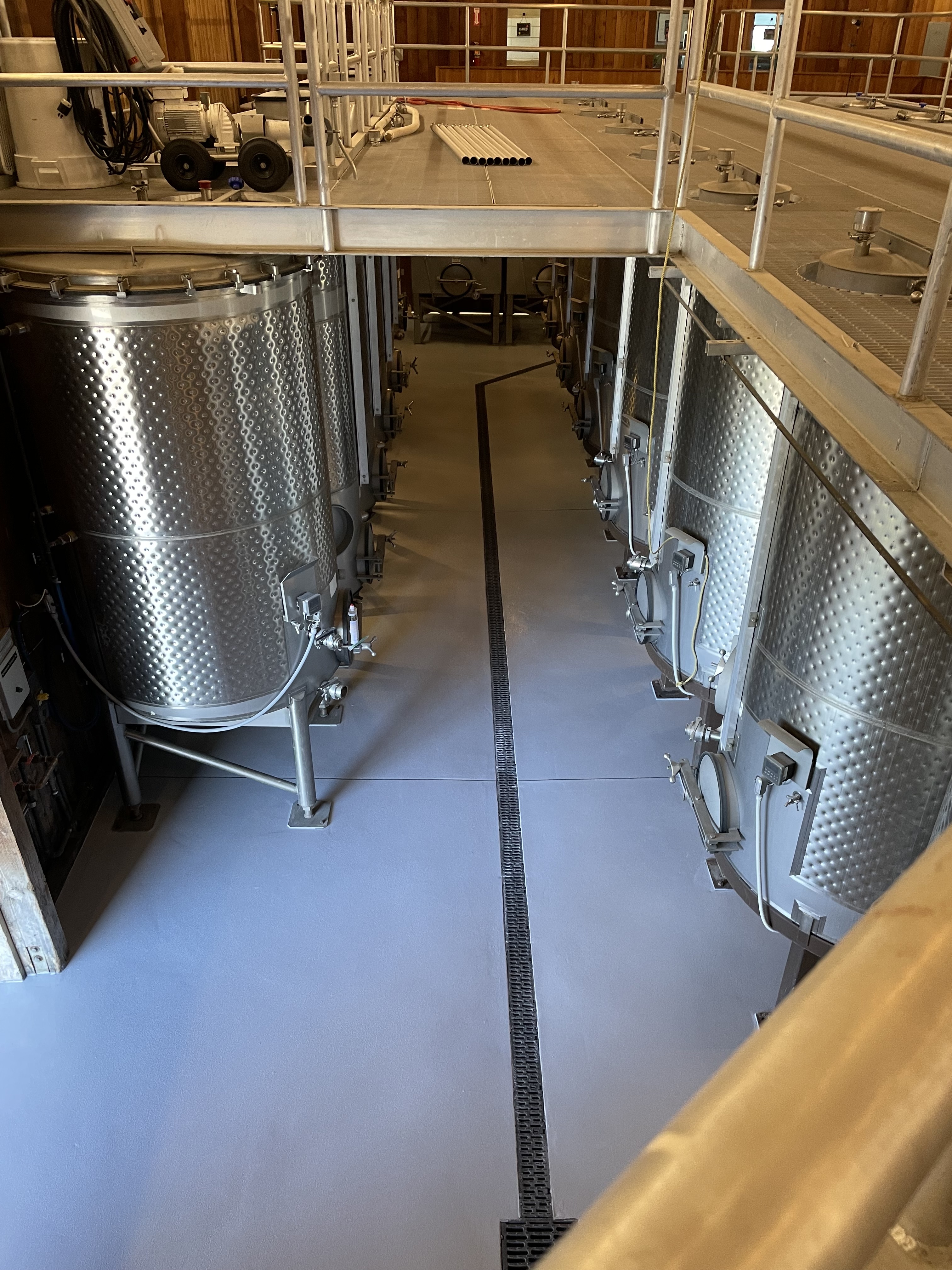
Technical Specifications
Engineered for winery environments
- • Tartaric acid resistant
- • Wine pH tolerance
- • Cleaning agent proof
- • Sanitizer compatible
- • Slip-resistant textures
- • Seamless installation
- • Quick cure options
- • Long-term durability
- • Temperature variation stable
- • Humidity resistant
- • UV stable formulations
- • VOC compliant materials
The Right Floor for Every Winery Zone
Crush pad, cellar, tasting room, and bottling line each punish a floor differently. We specify each zone on its own terms.
During harvest the crush pad is under continuous assault: grape must with a pH around 3.5, sugar-heavy juice that ferments in any crack it finds, forklift traffic moving half-ton bins, and daily hot-water washdown. We install urethane cement or high-build acid-resistant epoxy systems here, sloped to trench drains with aggressive broadcast texture so crews stay upright on juice-slick concrete.
Barrel rooms run cool and humid year-round - exactly the conditions where unsealed concrete grows mold and wicks ground moisture up into the room. We combine moisture-vapor mitigation with sealed, stain-resistant finishes that support stacked barrel racks and forklift aisles, and that wipe clean after topping losses and racking spills instead of absorbing them.
The tasting room is a retail floor that gets red wine spilled on it daily. Decorative epoxy and polished concrete give hospitality spaces a finish that photographs well, resists tannin staining, and handles the foot traffic of weekend crowds and event rentals - without the maintenance burden of wood or tile grout lines.
Bottling areas need a floor flat enough for conveyor and monoblock equipment, tough enough for pallet jacks and case-goods forklifts, and cleanable to food-grade standards. Where older slabs have spalled joints or trenching scars, our repair and overlay services restore a level substrate before the finish system goes down, protecting glass-handling equipment from vibration and misfeeds.
Timing is the constraint most winery projects live or die by. There is a real window between bottling and the next crush, and we plan installations to fit inside it - fast-cure materials, phased sections that keep tank and barrel access open, and crews that work around cellar operations rather than shutting them down. The alternative to doing this properly is familiar to most winemakers: bare concrete that etches white wherever must sits, joints that harbor fruit flies, and dust that ends up in open-top fermenters. A correctly specified floor removes all three problems for 15-20 years.
Winery Flooring FAQs
Common questions about flooring solutions for wineries and beverage production
Winery & Beverage Flooring Resources
Guides from our team on beverage production floors
Why brewery and winery floors fail in 18 months - and the specification choices that prevent it.
Read the Article →How drainage and cove-base details decide whether a washdown floor stays sanitary.
Read the Guide →Matching resin chemistry to acids, caustics, and cleaning regimes in production facilities.
Read the Guide →Ready for Your Winery Project?
Get specialized flooring solutions designed for wine production environments.